Logo Premis Alimara
Alimara Awards

Finalists

Finalists for the Alimara Awards

Each year, the Alimara Awards recognize the most innovative and transformative initiatives in the fields of tourism, hospitality, gastronomy, and communication.

The nominations received have been evaluated following a rigorous process that combines the evaluation of each project by academics from the CETT-UB research groups who select the finalists.

Their analysis takes into account the quality, innovation, impact, and real contribution of each proposal to the development of the sector, ensuring a diverse, representative, and high-level selection of finalists.

These will then undergo an expert evaluation process by a jury made up of leading professionals and academics in the sector, who will ultimately determine the winners.

Evaluation criteria

Through Experiences

  • Incorporate a high degree of innovation.
  • Connect people with the cultural and social attributes and values of the region.
  • Offer a unique, customizable, and memorable experience that awakens emotions and encourages active participation.

Through Audiovisual

  • Use audiovisual language creatively and strategically to convey messages with impact.
  • Generate awareness and reinforce the positioning of the brand, organization, or destination.
  • Connect emotionally with target audiences, encouraging their involvement and recall.

Through Digitalization

  • Promote new business models derived from digitization.
  • Increase competitiveness and business efficiency.
  • Improve the user and employee experience.
  • Increase the sustainability of processes.
  • Improve the ability to measure and analyze data for management and/or an optimized customer experience.
  • Develop digital talent within organizations.

Through Sustainability

  • Generate benefits for the local community.
  • Respect and promote culture and heritage.
  • Contribute to preserving biodiversity.
  • Encourage the rational use of resources.
  • Distribute the wealth generated equitably.

Through Research

  • Generate scientific theories and methods that contribute to knowledge in the fields of tourism, hospitality, and gastronomy.
  • Translate research findings into useful applications for the sector.
  • Promote competitiveness, sustainability, and innovation in the sector through research.

Alimara CAT

  • Use Catalan correctly and effectively in communication materials and actions.
  • Demonstrate linguistic sensitivity in dealings with Catalan-speaking users and customers.
  • Make Catalan a distinctive, creative, and inclusive element within the communication strategy.

Finalists for the 41st edition of the Alimara Awards 2026

Below you can see the finalists in the categories for the 41st edition of the Alimara Awards 2026. The winners will be announced at the awards ceremony on March 19 at the Alimara Hotel in Barcelona.

Through Experiences

Through Audiovisual

Through Digitalization

Through Sustainability

Through Research

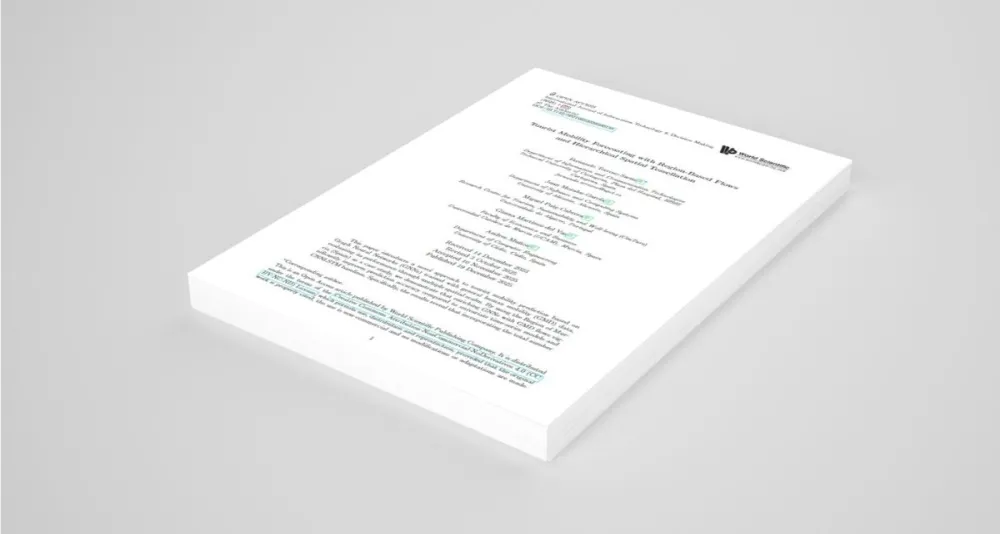
Tourist Mobility Forecasting with Region-Based Flows and Hierarchical Spatial Tessellation

Tourist Mobility Forecasting with Region-Based Flows and Hierarchical Spatial Tessellation

Who is behind this candidacy?

The Catholic University of Murcia (UCAM), through its research ecosystem (Vice-Rectorate for Research, International Chair of Tourism Intelligence, and Chair of Mobility and Sustainable Transport).

What is it about?

This project develops an advanced model for predicting tourist mobility that uses Graph Neural Networks (GNN) and real human mobility data to anticipate visitor flows to a destination. The study analyzes both tourist and non-tourist movements at different territorial scales thanks to hierarchical spatial tessellation, which allows the analysis to be adapted to various geographical units relevant to destination planning.

The results show a significant improvement in predictive accuracy compared to traditional time series-based models, offering a multiscale view that is key to the strategic and sustainable management of destinations.

What does it contribute?

  • More accurate prediction of tourist mobility, allowing demand peaks to be anticipated, services to be planned, and congestion to be reduced.
  • Multiscale territorial analysis, adaptable to municipalities, counties, or regions, facilitating more contextualized decision-making.
  • Strategic tools for sustainable planning, supporting administrations and destination managers with information based on real data and advanced AI models.
  • Methodological innovation by integrating general and tourist mobility through graph neural networks, opening up new possibilities for studying visitor behavior.
Access the research

Alimara CAT