Magalí Farràs Gironella, a professional in the tourism sector and a former student of CETT: "There is always time to change course"
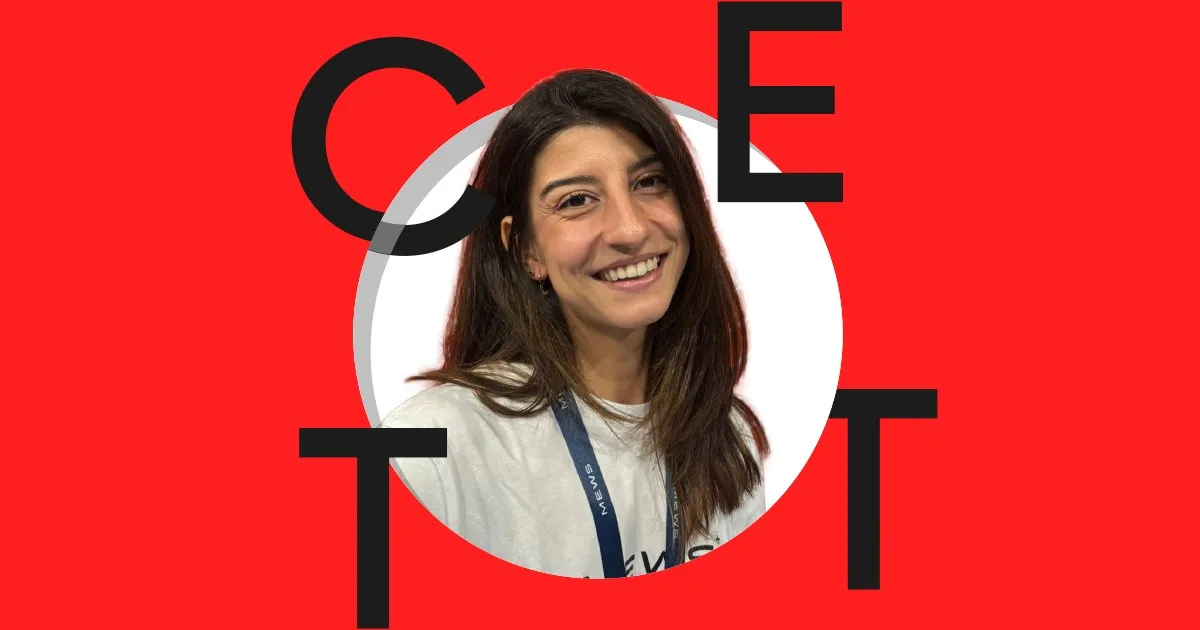
We spoke with the former CETT student, now a BDR at MEWS, about her international career and her transition from hotel operations to the technological world.
Magalí Farràs Gironella began her career in hotels and reception, working in destinations such as Fuerteventura, California, and Norway, where she led teams and gained a comprehensive understanding of the industry. She currently works in the sales department of MEWS, an international PMS, where she combines her operational experience with strategy and digital innovation.
For her, the key to professional growth is adaptability, continuous learning, and not being afraid to explore new avenues within the hospitality sector, an industry rapidly evolving towards digitalization and personalized service.
1. We'd like you to introduce yourself (your name, where you're from, what you studied, etc.).
Hello! I'm Magalí Farràs Gironella, I'm 28 years old, and I'm from Castelldefels, Barcelona. I studied Tourism and Hospitality at CETT-UB, specializing in the tourism and travel agency sector. However, I've mainly worked in hotels, as they offered me a wider variety of tasks and the possibility of traveling for work.
Later, I furthered my education with an MBA from UPC and a Postgraduate Diploma in Digital Marketing, Ecommerce, and Community Management. I currently work as a Business Development Manager in the sales department of MEWS, a cloud-based PMS with international coverage that offers customized solutions to optimize hotel operations, with a special focus on using technology to support efficiency and innovation.
2. What motivated you to choose CETT for your studies?
I've always been very interested in traveling and exploring other countries, and, since I'm good at connecting with people, I thought that a degree in hotel and tourism management would offer me the opportunity to gain practical experience in hotels and other companies in the sector anywhere in the world. At 18, I chose CETT because it's affiliated with the University of Barcelona, with international connections that provide very flexible internship and exchange opportunities all over the world.
3. What was your CETT experience like?
It was a very enriching experience! My generation experienced a significant shift in the use of technology in our field of study: we worked in groups with laptops in the library, and without artificial intelligence, we spent hours reading books and searching for articles online. However, I remember the professors as very dedicated, with interesting CVs and experiences to share. The projects were key to discovering the focus of my degree, and programs like Erasmus in Italy and how subjects were taught in other countries broadened my perspective. I also learned to work as part of a team and develop communication, integration, and organizational skills that I still use today.
4. Could you tell us about your career path since graduating from CETT, including your internships up to the present day?
After graduating, I started with an internship as a receptionist at Pierre & Vacaciones Village Club in Fuerteventura. This first operational experience allowed me to apply the knowledge I had acquired at CETT and understand firsthand how a hotel works, especially a resort with many short- and long-stay services.
The following year, in 2020, coinciding with the COVID-19 pandemic, I went to California to work as a guest at the Teleférico restaurant, originally from Barcelona. Although I had to return after six months for political reasons, this experience allowed me to learn about the restaurant industry from the inside. Subsequently, I worked in several hotels in Spain as a receptionist, combining operational tasks, customer service, and revenue management. I also had the opportunity to work abroad: first in the United States as a guest restaurant manager, and then in Norway as Assistant Front Desk Manager at three hotels in the Scandic chain, where I led temporary teams and managed large volumes of clients from tour operators. This period was very enriching, both professionally and personally.
Currently, I work at MEWS in sales. All my previous experience helps me understand the challenges hotels face, allowing me to communicate to management how technology can improve operations, benefit teams from within, and foster innovation, with a strategic and digital vision of the sector that is so enriching for our country.
5. What motivated you to take the leap to an international experience in Norway, and how will it influence your career?
I wanted to step outside my comfort zone and have an experience that would allow me to grow both personally and professionally. Besides improving my language skills, working in Norway will give me the opportunity to lead international teams and adapt to a new work culture. There are opportunities and positions that, in other countries, don't require years of experience, but rather demonstrating your ability. This experience has given me greater confidence, flexibility, and skills to manage diverse situations—qualities that have been key to advancing toward more strategic roles. At the same time, I completed an online digital marketing course, without knowing what awaited me upon my return after the season, of course. You never know, and it's good to have options.
6. Your career path includes roles in reception, team management, and now business development. What key lessons have you learned from each stage?
From reception, I learned customer focus, attention to detail, how to manage unexpected situations, and how to react quickly, always maintaining resilience and a smile. From team management: leadership, organization, and the ability to delegate, trust, and take a breath. From sales and BDR, I've learned to have a strategic vision, plan, and combine operational knowledge with technology and digital marketing. I've also developed skills to advise, support, listen to, and understand the needs of hoteliers, instead of imposing solutions.
7. What was the biggest challenge working in another country and how did you overcome it?
Besides being away from family and friends at an age when it seems like you're constantly missing out on important experiences, one of the biggest challenges was adapting to the intense hotel schedules, from 8 to 11 hours a day. In the case of Scandic Hotels, I was literally in the northern part of the continent, and despite being alone, I had to maintain my own and the team's motivation, enjoy the present, since many opportunities like this are temporary. I overcame it by adopting an open attitude, observing, listening to opinions, and trying to understand different ways of doing things.
At the same time, I suddenly found myself with a lot of responsibility, and initially I saw it as a punishment or a problem, but it was actually an opportunity to trust the team, move forward together, and find new ways to improve.
8. What skills do you consider essential for growth in hospitality and taking on international roles?
Adaptability, flexibility, communication skills, languages, digital skills, and an open mind to change. The ability to learn constantly, be resilient, and work as part of a team with people of different opinions, mindsets, and experiences is also very important.
9. You now work remotely. What differences, both positive and negative, do you find when you worked in direct contact with clients?
It's true that, after having worked in reception and in customer service, and having experienced physical exhaustion, back pain, and foot pain, being able to work remotely is especially valuable. This option of a remote or hybrid contract has given me flexibility and autonomy, as well as more time to better organize myself and reflect on both my work and prioritizing myself during work hours. The negative aspect is the lack of direct contact with clients and colleagues: I miss the unexpected, the day-to-day activity, and the human connection—aspects that are very enriching in the hotel sector and that, in any company, add great value to teamwork and allow you to demonstrate skills that aren't always visible when working from home.
10. You've gone from hotel operations to a strategic role in a technology company in the hospitality sector. How was that transition, and what attracted you to that change?
It was a very interesting transition, although at first I struggled to accept the idea of not returning to the "battlefield" of hotel operations. However, the change has allowed me to understand the sector from a more strategic and innovative perspective. It's an area that everyone who wants to be a part of will have to adapt to, since technology isn't slowing down; rather, it's part of a constant shift towards the future of the sector. It's up to us, as professionals, to ensure that this evolution is positive and enriching for the benefit of tourists and visitors, and not superficial. Mews has allowed me to combine the practical knowledge of the day-to-day running of a hotel with digital innovation, a balance that I find especially motivating and aligned with my professional development.
11. What advice would you give to current CETT students who dream of working abroad in the hotel sector? And what about remote work?
Don't be afraid to step outside your comfort zone and embrace international opportunities, even if they present challenges. Learning languages and adapting to new cultures is key. I believe that, with newer generations, there's often a lack of hands-on, customer-facing experience. That's why I think early professional experiences should start from the bottom: working hard, learning, exploring all areas, and understanding the actual operations. This allows you to be a decisive person when you're truly needed. Later on, being able to combine the convenience of remote work with being physically present in the office is ideal. I recommend working remotely as long as there's good organization, constant communication, and strong team ties.
12. How do you see the evolution of the hospitality sector, and what opportunities do you think exist for those who want to combine operational experience with technology?
The hospitality sector is clearly evolving towards digitalization, personalized service, and operational efficiency. Tourists are increasingly accustomed to more exclusive or personalized experiences, as it's becoming more difficult to offer truly unique experiences, as we see on social media. In this context, hoteliers who combine operational experience acquired over the years with digital knowledge have great opportunities to boost revenue, improve communication and intergenerational balance within teams, and develop new products tailored to the real needs of customers, such as coworking spaces, gyms, pilates classes, energy drink options, or vegan menus.
13. What has been the most important lesson you've learned in your professional career so far?
The most important lesson I've learned is that there's always time to change course and that there's no "right" age to pursue a career. You have to be humble, dare to learn new things, whether it's serving tables, creating a website, or presenting products at a booth, without looking back and dwelling on what could have been. Flexibility and adaptability are key: every experience offers lessons and helps you grow, and combining operational experience with digital and strategic skills is a powerful formula for professional advancement today.
If you have any advice or would like to add a question you think would be interesting for future tourism students or recent graduates, please feel free to share it.
Look for job opportunities that you're passionate about and that motivate you to learn, that adapt to current industry trends, and that highly value languages, communication skills, and the ability to foster personal relationships because these are the memories that will last the longest.
Network and don't be afraid to meet new people: the hospitality industry is full of creative minds from whom you can learn a great deal. Tourism offers many possibilities, and this can be intimidating, but every experience counts: it enriches your resume and helps you make better decisions. Whether working in hotels, marketing, human resources, travel agencies, or restaurants, the goal is the same: to make others happy and promote a service, destination, or product to meet a need and benefit everyone.
Traveling isn't just about leisure: it's about growth, stepping outside your comfort zone, and learning from new cultures and people. Embrace every experience as a learning opportunity.