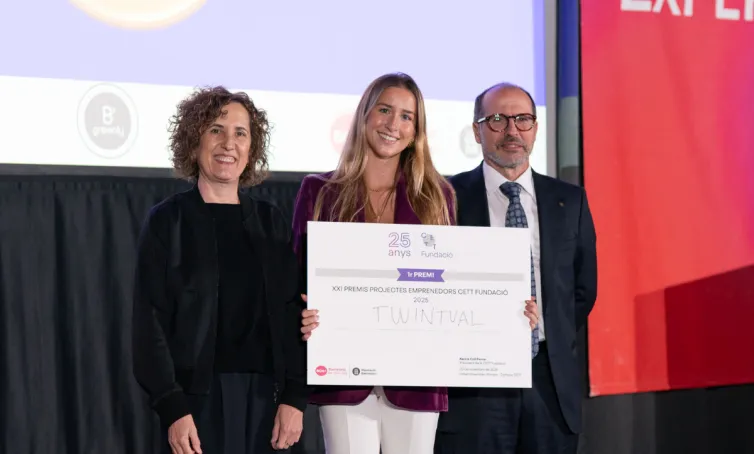
CETT Fundació Entrepreneurs Awards 2025 | Your Friends Are Boring, Second Prize: “To start a business, you need to lose your embarrassment and stop overthinking”
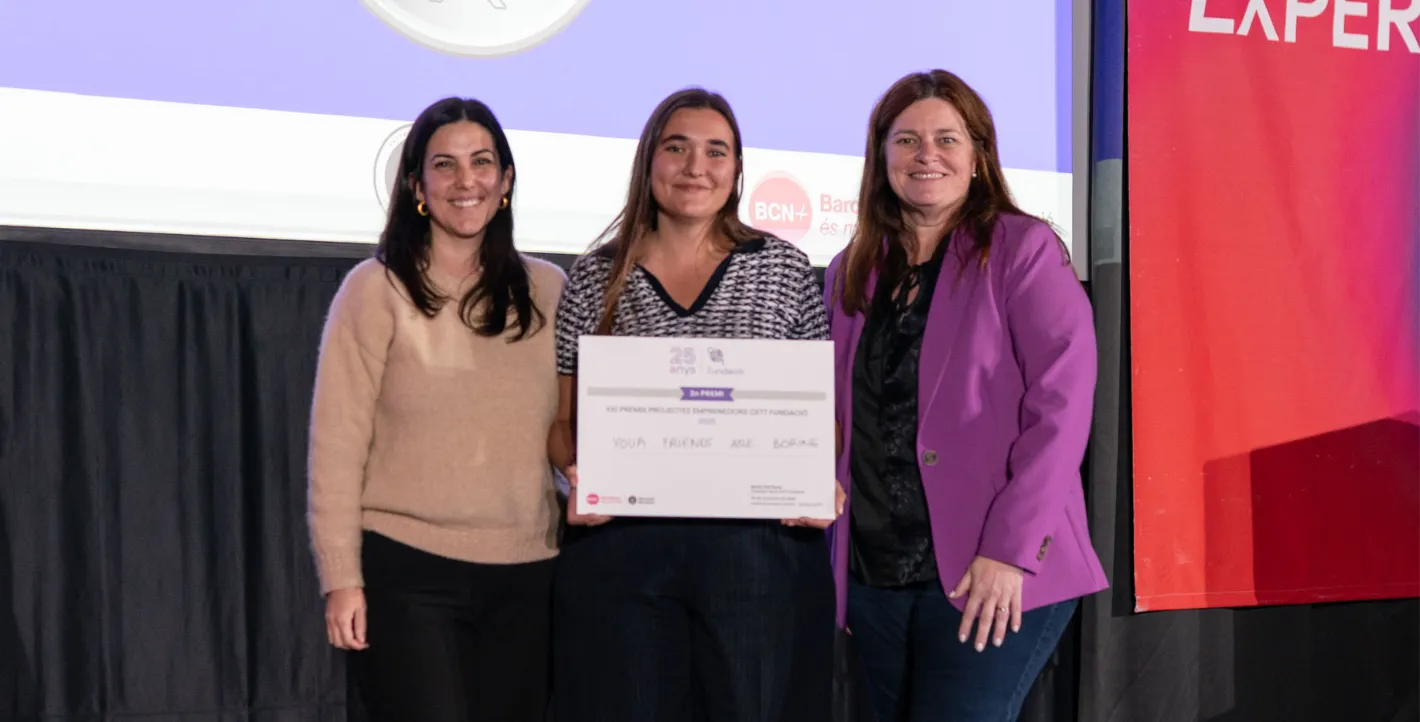
Your Friends Are Boring (YFAB) is a traveltech startup that connects like-minded people to travel in groups through unique experiences led by influencers.
Your Friends Are Boring (YFAB) is a traveltech startup redefining group travel through a platform that connects people with shared interests to enjoy unique experiences, organized by content creators and community leaders. Its model combines technology, automation and an outsourced growth strategy that allows it to scale without a heavy structure.
21st Entrepreneurship Awards
The CETT Fundació Entrepreneurs Awards recognize the best entrepreneurial projects in the tourism, hospitality and gastronomy sectors. The prize consists of a six-month mentoring program led by members of the CETT mentoring team, as well as a financial endowment.
The Your Friends Are Boring team will receive mentoring from Alicia Gatius, member of FIDEM (International Federation of Women Entrepreneurs) and Chief Growth Officer at Niche Beauty Lab. Toni Mascaró, CEO of eMascaró, a company specializing in the creation of “WOW 360” experiences in sectors such as tourism and hospitality.
Your Friends Are Boring
We spoke with Clara Haba, CEO of the company, to learn more about its business model.
-
How did Your Friends Are Boring come about, and what market need does it aim to address?
It came about gradually, as the result of many coincidences. I posted in a Facebook group: “Who would come to Nicaragua? These are the dates and these are the prices.” Within three days, 300 people wrote to me. From that message, we ended up being a group of ten travelling together for a week and surfing. That was the click.
That’s when I realized something that happens to all of us at some point: suddenly your friends live in different cities, and the ones nearby don’t necessarily share your hobbies. If you like diving and your friends don’t, what do you do? You go with others who do. That’s what we solve.
-
A new generation of ‘solo’ travelers seeking to connect with like-minded people has emerged. How do you address this reality through your platform? What is your user profile and what motivates them to choose YFAB?
We organize group trips for strangers who share similar interests, such as surfing or diving. What we achieve is that this new generation of solo travelers experience what we call the “camp effect”: that magic that happens when, in a very short time, strangers become close friends.
Most people who travel with us are young adults who are already working and want to disconnect from time to time. We focus on the Anglo-Saxon market, so the vast majority of our travelers come from the United States or the United Kingdom.
-
How do you ensure that each experience is unique and aligned with the expectations of these new traveler profiles?
Our trips always revolve around a shared hobby, so they are not trips where we cram a thousand destinations into one week. We go to a single place and stay there for a full week, with the goal of enjoying the hobby and connecting both with the group and with local people.
In addition, we always work with a trip leader, who in our case is usually a content creator responsible for promoting and leading the trips on site. They are key because they bring energy to the group and, together with local suppliers, ensure that expectations are met.
-
What criteria do you follow when identifying and selecting these trip leaders, and how is each of them involved in the design and execution of the trips?
Firstly, we look for profiles who are not typical content creators. We look for people who have worked in surf camps, volunteer programs or environments with a high influx of strangers. The fact that they also want to lead and travel with the group says a lot about them. In fact, many other content creators don’t want to do that.
We’re quite good at identifying the right trip leaders — in fact, it’s a bit of our secret sauce, so that’s as far as I can go. We design the trips, and all the logistics and infrastructure are handled by us as well. They take care of promotion and act as hosts at the destination, and together with the local supplier, they are a point of contact if anything comes up.
-
How does their role help build community and enrich the travelers’ experience?
They are the ones who promote the trips, attract their audience, energize the chats before the trip and provide a lot of reassurance before and during the experience so that people feel confident travelling with strangers. For many participants, it’s also their first time practicing the hobby.
-
What role does technology play in your growth model, and how is it used to connect people with shared interests?
Our technology is focused on two main goals: reducing manual operations when creating and managing trips, and identifying the ideal trip leaders. In our case, the trip leader attracts people who already have a lot in common, simply because they are followers of that person. We also always say that ten people who want to go surfing with strangers in El Salvador, for example, already have quite a lot in common to begin with.
-
You are currently focused on markets such as the United States and the United Kingdom. What are your international expansion plans, and which business lines or verticals are you looking to grow into?
Right now, our main focus is on gaining much more market share in the United States. As for verticals, we are gradually adding new hobbies and destinations to our offering, but for now we remain focused on the same target audience, and we will continue to do so for quite some time.
-
What does this recognition from the CETT Fundació’s professional jury mean to you?
It’s amazing. For us, it means recognition from people who not only understand innovation and business, but also know the tourism sector extremely well. It motivates us to believe that we’re on the right track.
-
What advice would you give to students who are thinking about starting a business?
It might sound a bit cliché, but they should go for it. The hardest part is losing your embarrassment and starting with the simplest thing. We make excuses: when we have the website, when we have the app, when we have the money… All of that is just excuses. To start a business, you need to lose your embarrassment and stop overthinking. Something as simple as posting on Facebook helped me see that there were people interested in what I was doing — and they bought the first trip.