Julio Barluenga, sommelier and entrepreneur, CETT alumnus: “It’s better to share knowledge than to keep it to yourself; every path has its journey, but it is built day by day.”
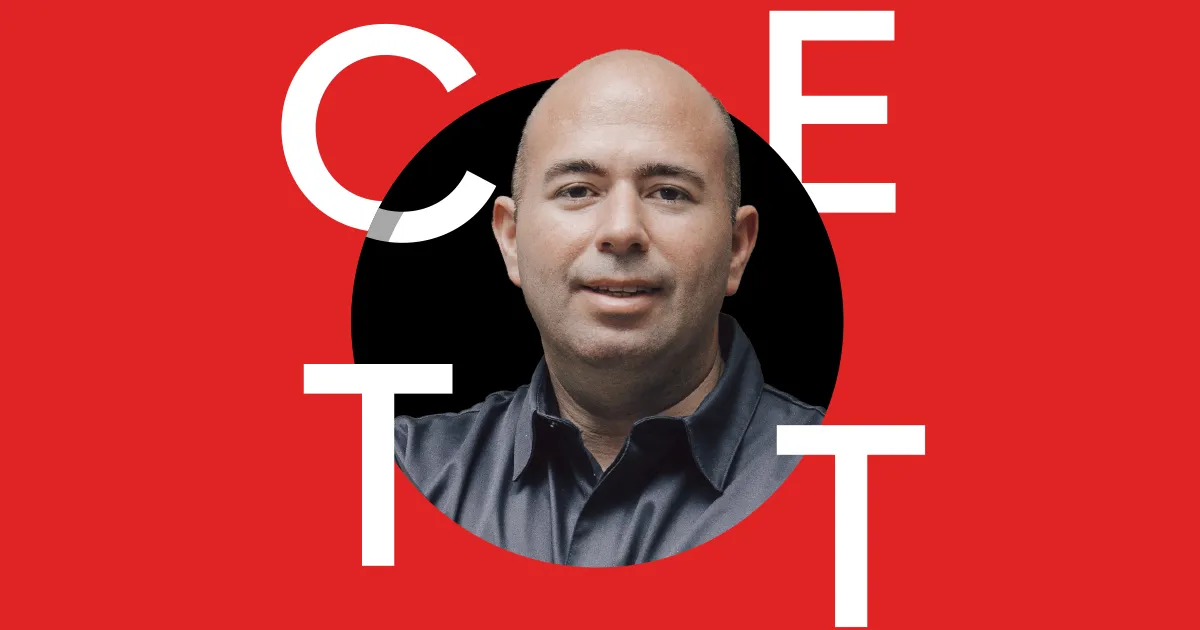
We spoke with the former CETT student and founder of Vertical Wine Bar & Shop to learn about his international career, his time in top kitchens and his commitment to creating a wine bar brand with a global reach.
After working in renowned culinary establishments like elBulli and leading international projects in Peru, Julio Barluenga returned to Spain determined to create his own brand. This led to the creation of Vertical Wine Bar & Shop, now present in Málaga, Barcelona, and Maó, with new openings on the way. His journey combines experience, dedication, and a clear commitment to a wine bar model with its own distinct identity.
1. We would like you to introduce yourself (your name, where you are from, what you studied, etc.)
Julio Barluenga Paraíso, Barcelona, Hotel Management, Small Restaurants and Institutional Catering.
2. What motivated you to choose CETT for your studies?
I had been involved with the University of Barcelona for several years in other disciplines, and someone close to me knew of my professionalism in the restaurant industry and found me a place in Barcelona to study management. This would give more meaning to all the work I had done previously and serve as a springboard to change my life and offer better opportunities.
3. What was your experience like at CETT?
The experience was very positive. I was able to meet people from other areas of my profession, other sectors of the restaurant industry that I hadn't seen before. The studies helped me to become a professional in management and to be able to take on positions in a much larger organization.
4. Could you tell us about your career path since graduating from CETT, including your internships, up to the present day?
In my personal case, I must say I was very lucky. Thanks to CETT and the meeting held in February with other organizations, I was able to have several interviews, including one with elBulli. They liked my profile because, although I hadn't worked in any Michelin-starred establishment, I had at least eight years of experience before my studies. Naturally, my arrival at elBulli was with a different background. I started there as an intern, but after only a few weeks, they offered me a position on the elBulli sommelier team, and I was able to work there from 2009 to 2011.
In 2011 and 2012, I had my first experience as Food and Beverage Director at a Relais & Châteaux, Mas de Torrent 5*GL in the province of Girona, thanks to my studies at CETT. At the end of 2012, my head waiter at elBulli suggested I go to Peru with him to help Peruvian chef Gastón Acurio carry out one of the most significant relocations ever undertaken in Peru. We helped the chef move his ASTRID&GASTÓN restaurant from one side of the city to the other to rebuild it. In Peru, I was the head sommelier at Astrid y Gastón. I won the title of best sommelier in Peru in 2015, and shortly afterward, I was appointed Corporate Sommelier for Acurio Restaurantes. I developed wine lists for the corporation's 70 restaurants and trained the teams at each one. I also taught wine pairings at the Gastón Acurio School with Telefónica at the Pachacutec Foundation during my last year in Peru. I returned to Spain four years later in 2017.
2017 and 2018 gave me the opportunity to work with Paco Morales at Euskalduna in Bilbao. 2019 was the year I returned to the Empordà region to take on my second role as Food and Beverage Director at the Hotel Alabriga in Sant Feliu de Guíxols. This position allowed me to deepen my knowledge of hotel management, HR, events, art, and luxury. That period also served to finalize the development of my current project, VERTICAL, at the studio level. In 2020, after the pandemic, I moved to Málaga and began working at Dani Carnero's Kaleja restaurant, helping him achieve his first Michelin star. He also helped me learn everything I needed to know to launch my own project in Málaga.
5. After a successful career in sommellerie and restaurant management, what motivated you to start your own business?
The first time I thought about starting my own business was during my time in Peru. The idea of having a space to share my experiences and knowledge appealed to me greatly. This, combined with the fact that for four years in Peru there was a word that was part of my vocabulary, VERTICAL, made it a perfect fit. My guiding principles have always been knowledge, dissemination, and excellent service, creating a space...
6. What was the biggest challenge in transitioning from working for large companies to leading your own project?
The biggest challenge, without a doubt, is the uncertainty of knowing if the chosen path is the right one, if the project will achieve the level of engagement you, as a professional, believe it has, and what the project can offer.
7. How did the idea for Vertical Wine Bar & Shop come about, and what steps did you take to make it a reality?
Vertical emerged as an idea during my time in Peru, when the word itself appeared in the descriptions of many wines we served in our pairings. It's a word that relates to the impression certain wines make on the palate when tasting them, and it has the same meaning in Spanish, French, and English, which seemed fitting for the brand of a project that was, at that time, more spiritual. The next steps, once I returned to Spain, were to find two cities that would allow me to conduct market research. I ruled out Barcelona and Madrid, thinking that a future project could bring Vertical to those cities once it was already established, and decided to focus on geographically opposite cities but with similar growth patterns in countries with similar growth trajectories.
8. What skills acquired in your previous career were key to your entrepreneurial success?
The tools I consider key to having successfully launched this venture have been based on thorough market research, weighing the pros and cons, prior work in personnel management, location planning, managing food, beverage, and fixed costs, and understanding the balance the company needs between expenses and profits to avoid losses.
9. How do you manage the most difficult part of entrepreneurship: uncertainty and strategic decision-making?
Uncertainty is always present. I would say that after three years, each city and each day presents different characteristics, making each day unique and thus complicating decision-making. However, one of the most important has been understanding that Vertical is a brand that needs to grow. The goal is to become one of the world's leading lifestyle brands in three cities: Málaga, Barcelona, and Mahón. In 2026, we will open in our fourth city and continue to expand to other locations.
10. What would you say to students who dream of starting a business in the food or cultural sector?
To all students who have a dream like I did, I would say that the first thing is to get as much training as possible, both in management and languages. Once they have this training and a clear idea, they should take short courses in spaces that reflect the style of what they have in mind to better understand the business. Then, they should prepare the financial aspects; there are many organizations that offer more support for starting a business.
11. If you could give three practical tips for starting your own business, what would they be?
Training and experience in the sector, market research of the location where the business will be, and everything related to consistency, perseverance, humility, and a lot of dedication. Employees work set hours, but for us, 8 hours a day won't be enough to manage the entire business.
12. What common mistakes should those who want to start a business in this sector avoid?
One of the mistakes is thinking that experience alone will guarantee a successful business model from day one. A business starting from scratch is just that: scratch. Therefore, you have to provide the tools so that visitors always feel they are entering a unique and distinctive space within its sector.
13. What has been the most important lesson you have learned in your professional career so far?
The lessons life teaches you are crucial in defining the kind of person you want to be and the image you want to project. In my case, humility and daily hard work have made me a better person and professional. Even the most challenging moments of my career as a sommelier didn't change me. I believe that the legacy of elBulli, for those of us who had to project that image, that distinctive identity, stays with you, and you try to ensure that those around you share the same personality. Dedication, humility, perseverance, sacrifice and knowledge; it is better to share knowledge than to keep it to yourself. Every path has its journey, but it is built day by day.