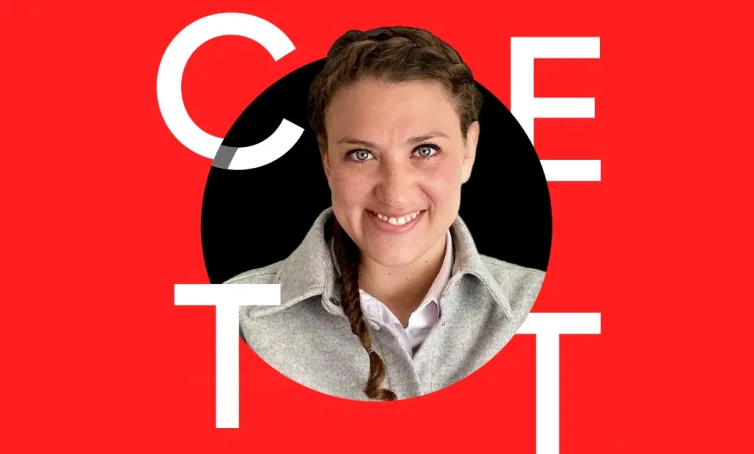
Júlia Llebaria, project leader and CETT alumna: “Real development is only possible by listening to the territory and the people who live there.”
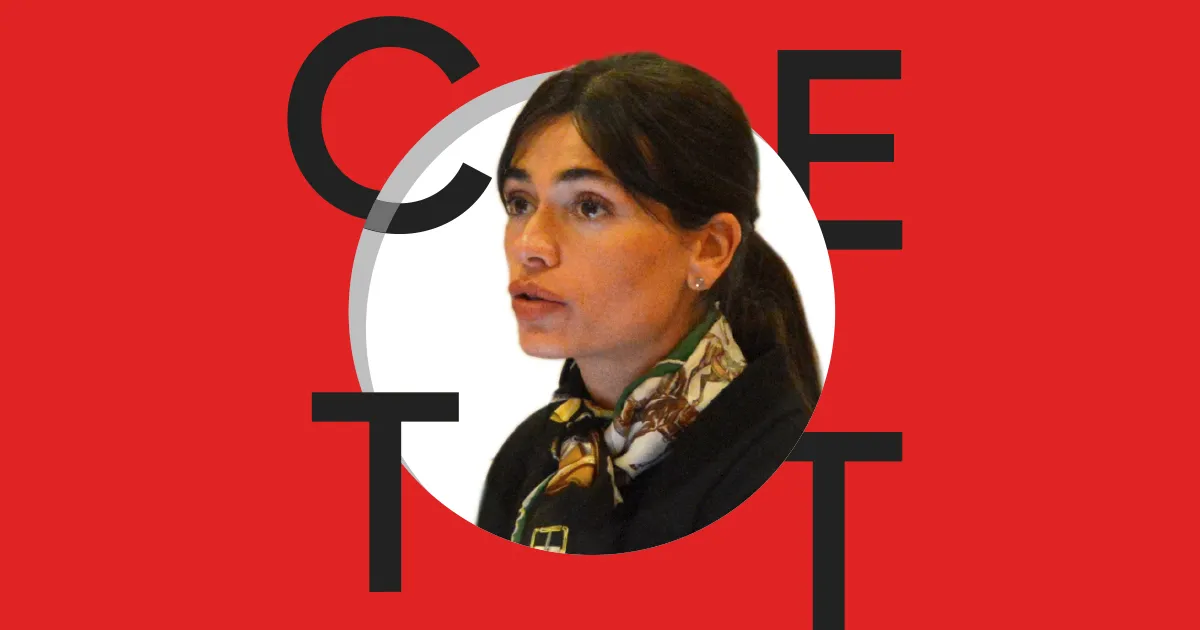
We spoke with the former CETT student and leader of projects, communication and strategic alliances at the Los Maestros Foundation, to learn about her career, her vision of sustainable tourism and her commitment to the territory.
Júlia Llebaria, a Tourism graduate specializing in Responsible and Sustainable Tourism, has worked in various areas of the sector before finding her true calling: creating projects with real social impact. She currently works at the Los Maestros Foundation, promoting initiatives that connect education, territory, and community, with the aim of revitalizing rural areas and highlighting their unique identity. With a focus on the land and its people, she believes that transformative and sustainable projects can only be designed through listening and close collaboration.
1. We'd like you to introduce yourself (your name, where you're from, what you studied, etc.).
My name is Júlia Llebaria Mas, I'm from Barcelona, and I studied Tourism at CETT. After a few years, and already in the midst of the pandemic, I decided that the best course of action was to continue my education, so I specialized by completing a Master's degree in Responsible and Sustainable Tourism, with the aim of furthering my professional development and aligning myself with some very clear values.
2. What motivated you to choose CETT for your studies?
For me, CETT has been, is, and will continue to be a leading center in the world of tourism and gastronomy. That's how I perceived it before enrolling, and reality exceeded my expectations. The day I visited the center, I knew it was right, and I didn't hesitate for a second.
3. What was your CETT experience like?
It was an excellent experience, both professionally and personally. I will always cherish the memories of my professors, classmates, and everyone I had the pleasure of meeting during this time.
4. Could you tell us about your career path since graduating from CETT, through your internships, up to the present day?
Discovering my specialization—hotels or tourism—wasn't easy. That's why I was fortunate enough to try different fields: first in a small travel agency office, then in a tourist office in my grandparents' village. Later, thanks to the CETT job placement service, I entered the world of events. Finally, I joined the hotel sector, starting at reception in the MIM hotels of the Majestic chain, where I grew professionally over four years until I became Guest Service Manager. It was at that point that I felt I had fully developed within the hotel industry, and I decided to pursue a more socially conscious path, aligned with my personal values and with the desire to generate a more direct impact on people and the region.
5. What led you to envision a different future for yourself outside of the hospitality industry and take the leap into entrepreneurship and project management?
Although the hospitality industry has given me a lot, I felt the need to create my own projects aligned with my personal values. I wanted more creative freedom, a greater social and environmental impact, and to participate in creative processes from scratch. I have always seen tourism as a sector with great potential for positive impact, especially for those of us who love working with people. After exploring many branches of the sector, I discovered what I now consider my main challenge: working with the local community and generating real impact.
6. You are currently part of the Los Maestros Foundation. What does your work entail, and what is the main professional challenge you face in this project?
I am currently the Project, Communication, and Strategic Alliances Leader at the Los Maestros Foundation. My work focuses on project design and management, defining the communication strategy, and creating alliances with institutions, companies, and stakeholders in the region. This is one of the most challenging projects of my professional career, as we understand education as a key tool for change, capable of generating a real impact on people and contributing to the fight against depopulation. All this work connects perfectly with my background in tourism, especially regarding land management, working with people, and creating projects with social impact.
7. What mistakes did you make at the beginning and what did you learn?
One of the most common mistakes, and the one from which I've learned the most, is creating projects from the top down without sufficiently listening to the voices and real needs of the local communities. Over time, I've come to understand that communication is the biggest challenge, both internally and externally. The real challenge is to listen to, study, and thoroughly analyze the territories and the people who live in them in order to value the towns, their traditions, and customs. Only in this way can we design projects that allow us to manage them properly and contribute to providing all communities with the same resources and rights, from a fair and sustainable perspective.
8. How are your values and worldview reflected in the work you do at the Los Maestros Foundation?
My worldview is reflected in an understanding of development rooted in the land and its people. The Los Maestros Foundation was founded five years ago in Tragacete, a small town in the Serranía de Cuenca mountain range with only 261 inhabitants, which perfectly exemplifies the challenges and opportunities of rural life. From this environment, we are building a project with social, cultural, and educational impact, based on listening, close relationships, and respect for local identity.
9. What do you dream of building in the coming years?
I dream of continuing to build projects with real impact, capable of changing lives. I would like to continue promoting initiatives that value rural areas, the people who live there, and their identities, contributing to generating opportunities, a sense of belonging, and a future from an educational, social, and sustainable perspective. At the same time, I dream of preserving and making eternal the legacy of older generations, giving voice to knowledge and memories that cannot disappear and that are also part of our culture. I dream of transforming projects into creative laboratories, where tradition and innovation meet to reinvent the future of our communities without losing their essence.
10. Is there any valuable lesson you have learned from your studies to now, as a project creator, that you apply in your work today?
Creating any project based on the real needs of the area and its people is essential. This lesson is applicable both to the hotel sector—where design and programming must be based on the needs and preferences of the client—and to the creation of social projects. In every field, communication is the greatest challenge and the key tool for ensuring that all the effort and work have meaning and reach their intended destination.
11. What has been the most important lesson you have learned in your professional career so far?
That we must be in constant training. We live in a world that is advancing very rapidly, and it is necessary to stay at the forefront. What is our job today may not be tomorrow, and accepting this change is part of professional growth.
12. What would you recommend to current CETT students who are in the process of building their professional path?
I would recommend that they take full advantage of all the services aimed at students, as well as the agreements with other universities, especially the opportunities to do an Erasmus exchange. It is one of the few things I regret not having done, because it provides a very enriching perspective both personally and professionally. I would also encourage them to explore, make mistakes, and listen to themselves, because the path is not linear, and every experience adds value.