Kitchen brigade: hierarchy, positions, and responsibilities of each team member
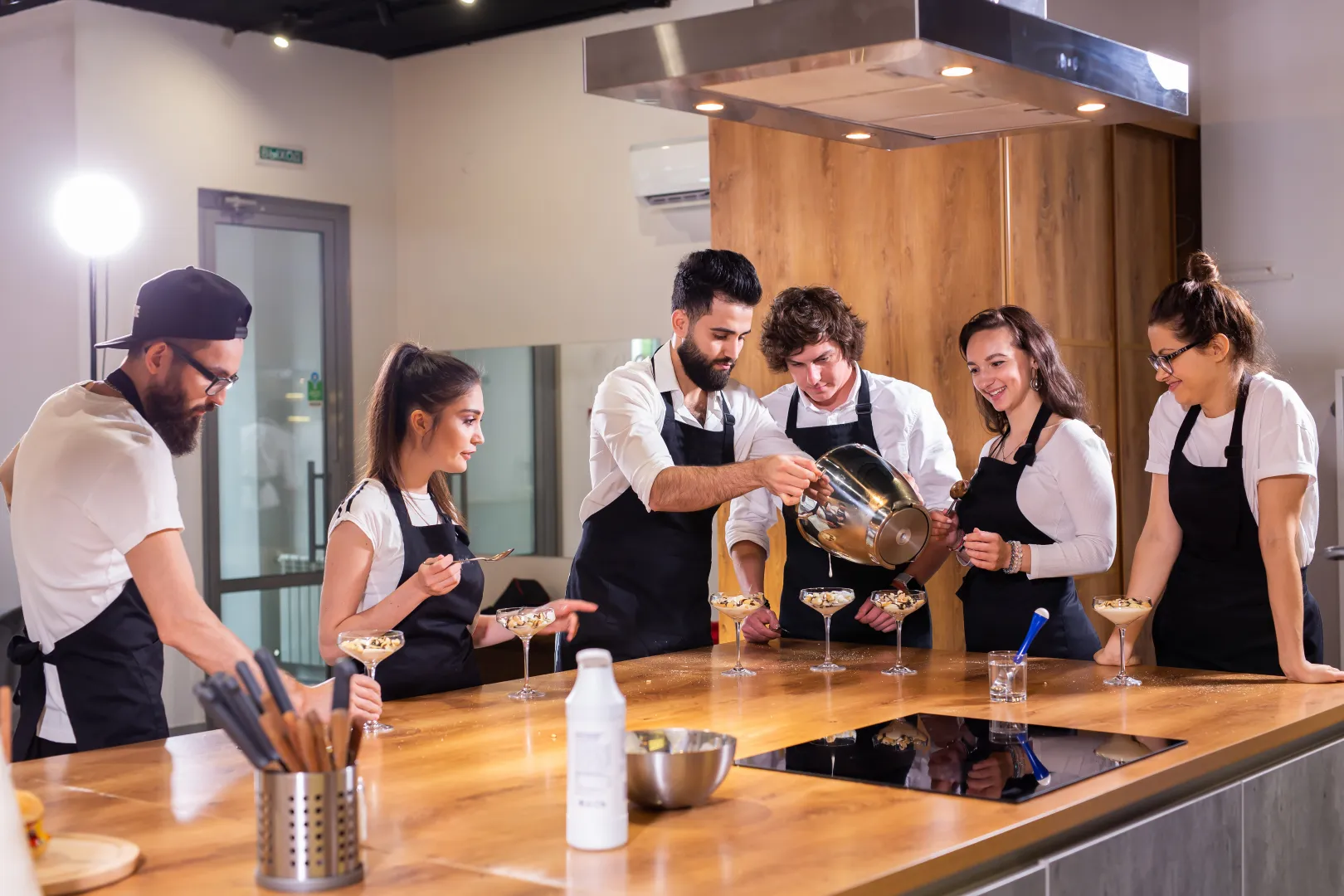
Discover how a kitchen brigade is organized, from executive chef to kitchen assistant, including each role’s responsibilities, the traditional kitchen stations, and how to advance your career.
The kitchen brigade is the hierarchical organizational system used in professional kitchens: each team member has a specific position, clearly defined responsibilities, and a supervisor to whom they report. Developed by French chef Auguste Escoffier in the late 19th century, this system, with some adaptations, remains the standard structure in restaurants, hotels, and institutional foodservice operations around the world. In this article, we explain who's who in a kitchen brigade, what each position involves, and what training you need to move up the ranks.
What is a kitchen brigade, and why is it still relevant today?
The term brigade de cuisine originated in the kitchens of London's and Paris's grand hotels, where Escoffier introduced an almost military-style system to bring order to the chaos of meal service: tasks divided among stations, a clear chain of command, and a single communication channel between the kitchen and front-of-house staff. The goal was twofold: to serve hundreds of guests while maintaining consistent quality and to prevent multiple people from performing the same tasks.
More than a century later, the system remains in place because it addresses three challenges that every kitchen still faces: coordinating large teams in limited spaces, ensuring that every dish is prepared consistently during every service, and training staff progressively. What has changed is the scale: modern kitchens rarely have the twenty stations of the classical brigade system, but they retain its underlying structure of clearly defined responsibilities.
The kitchen hierarchy, from top to bottom
This is the complete structure of a kitchen brigade. In a small restaurant, one person may take on several roles, while in a hotel with multiple dining outlets, dozens of professionals may work across the different kitchens.
|
Position |
Also known as |
Main responsabilities |
Reports to |
|---|---|---|---|
|
Executive chef |
Culinary director |
Oversees culinary strategy, menus, costs, purchasing, and kitchen teams across all dining outlets |
Hotel or group management / F&B manager |
|
Jef@ de cocina |
Chef de cuisine |
Manages daily kitchen operations, including menus, recipe costing, orders, staff schedules, and service quality |
Executive chef (or management, if there is no executive chef) |
|
Sous chef |
Second-in-command |
Coordinates service at the pass, supervises kitchen stations, and steps in for the head chef |
Head chef |
|
Station chef |
Chef de partie |
Manages a specific station (meat, fish, pastry, etc.) and its team |
Sous chef |
|
Line cook |
Demi-chef de partie, station cook |
Prepares dishes at their assigned station and supports the station chef |
Station chef |
|
Kitchen assistant |
Commis chef |
Handles mise en place, basic food preparation, cleaning, and station organization |
Line cook or station chef |
|
Apprentice or intern |
Stagiaire, apprenti |
Learns by rotating through different kitchen stations under supervision |
Station chef |
|
Kitchen steward |
Plongeur, steward |
Washes kitchen equipment and utensils and maintains kitchen cleanliness and hygiene |
Sous chef or head chef |
Executive chef: the business vision
The executive chef spends more time in the office than at the stove. They define the culinary offerings across all dining outlets, negotiate with suppliers, monitor food costs and profitability, structure kitchen teams, and represent the culinary department to management. This role is typically found in hotels, restaurant groups, and institutional foodservice companies. In an independent restaurant, these responsibilities usually fall to the head chef or the owner.
Head chef: the person responsible for keeping everything running smoothly
The head chef oversees daily kitchen operations: creating and updating menus, calculating recipe costs, placing orders, organizing staff schedules, training the team, and ultimately ensuring that every dish meets the required standards. In many restaurants, the head chef also cooks and oversees the pass during service. This is often the position that aspiring culinary leaders aim to achieve.
Sous chef: the link between kitchen management and station teams
The sous chef translates the head chef's decisions into specific instructions for each kitchen station. They supervise mise en place, manage timing during service, resolve issues, and step in for the head chef on their days off. In larger kitchens, there may be more than one sous chef, assigned to different shifts or areas.
Station chef: the specialist in charge of their station
Each kitchen station (meat, fish, side dishes, cold dishes, pastry, etc.) has a station chef who specializes in its techniques, organizes production, and supervises the cooks and kitchen assistants assigned to it. This is the first position that involves managing other team members, making it a natural stepping stone toward becoming a sous chef.
Cooks, kitchen assistants, and apprentices: the foundation of the kitchen hierarchy
The station cook prepares the dishes assigned to their station; the kitchen assistant handles mise en place, peeling, portioning, and keeping the station clean; and the apprentice or stagiaire rotates through different stations to learn. These roles provide the foundation for developing the technical skills, speed, and discipline needed to advance through the kitchen hierarchy.
The traditional stations of a professional kitchen
In Escoffier's brigade system, the kitchen is divided into stations, each specializing in a specific type of food preparation. Today, many kitchens combine these stations (hot kitchen, cold kitchen, and pastry being the most common divisions), but understanding the full structure helps clarify who does what.
- Sauces (saucier): Sauces, stocks, sautéed dishes, and traditionally, the most complex meat dishes. This is considered the most prestigious station.
- Fish (poissonnier): Fish, seafood, and their accompanying sauces.
- Roasting and grilling (rôtisseur and grillardin): Roasted, grilled, and fried meats.
- Vegetables and side dishes (entremetier): Vegetables, soups, eggs, pasta, and rice dishes.
- Cold kitchen (garde-manger): Salads, pâtés, terrines, cold cuts, and the preparation and portioning of raw ingredients.
- Pastry (pâtissier): Desserts, breads, pastries, and other sweet preparations.
- Relief chef (tournant): A versatile cook who can step in at any station when needed.
- Expediting (aboyeur): Receives orders from front-of-house staff and calls them out to the kitchen stations. Today, this role is usually handled by the head chef or sous chef.
How the kitchen brigade varies by type of establishment
There is no single kitchen brigade structure. Team size, the number of stations, and the responsibilities of each position depend on the business model.
- Fine dining restaurant: Kitchen brigades typically consist of 8 to 25 people, including a head chef, one or two sous chefs, station chefs, cooks, and stagiaires. Technical skills, precision, and creativity are particularly valued, and rotating between stations is common.
- Hotel with multiple dining outlets: Teams range from 20 to 60 people or more, led by an executive chef, with head chefs overseeing individual outlets (restaurants, banquets, breakfast service, and room service), supported by sous chefs and station teams. Management skills, cost control, and high-volume food production are essential.
- Institutional foodservice (hospitals, schools, and corporate dining facilities): Teams typically consist of 5 to 30 people per location, including a head chef or production manager, cooks, and kitchen assistants. There are fewer specialized stations and more standardized processes, with food safety, planning, and nutrition taking priority.
- Independent or neighborhood restaurant: Small teams of 2 to 6 people. The head chef also cooks, working alongside one or two cooks and a kitchen assistant. Versatility and speed are especially important.
- Chain restaurant: Teams generally consist of 4 to 12 people per location, including a kitchen manager, cooks, and kitchen assistants, following highly standardized procedures established by corporate headquarters. Maintaining consistent standards and managing the team effectively are key priorities.
How to advance through the kitchen brigade: education and experience
Advancing through the kitchen hierarchy requires two things: hands-on experience and education. Practical experience builds technical skills and speed, while formal culinary education provides knowledge that cannot be gained during service alone, such as recipe costing, team management, food safety, and production planning. Here is the typical career progression and the corresponding training opportunities available at CETT:
|
Career stage |
Typical position |
Recommended education |
|---|---|---|
|
Entering the kitchen |
Kitchen assistant, apprentice |
Vocational Training in Culinary Arts, Gastronomy, and PastryVocational Training in Culinary Arts, Gastronomy, and Pastry or Intermediate Vocational Training Program in Cooking, Gastronomy, and Restaurant Service |
|
Developing technical expertise |
Station cook, station chef |
Advanced Vocational Training Program in Kitchen Management, with specializations such as Restaurant Chef, Hotel Chef, Gastronomic Pastry, Institutional Foodservice, or Catering |
|
Taking on team leadership responsibilities |
Sous chef, head chef |
Bachelor's Degree in Culinary and Gastronomic Sciences (CETT-UB), which incorporates food science, innovation, and management |
|
Culinary management and leadership |
Executive chef, foodservice director, F&B manager |
CETT's culinary vocational training programs include 515 hours of internships at partner companies (fine dining restaurants, restaurant chains, hotels, and institutional foodservice operations), as well as hands-on training in the campus's professional kitchens, the Aula Restaurant, and the Alimara University Hotel. This means that students gain experience working as part of a real kitchen brigade before completing their studies. If you want to learn more about what to expect from a culinary career in terms of working hours and salaries, read our article Working in a professional kitchen: salaries, schedules, and what to really expect from the profession.
The skills valued at each level of the kitchen hierarchy
- Entry-level positions (kitchen assistants and cooks): Cleanliness and organization, speed in mise en place, the ability to follow instructions, and physical stamina. Avoiding the most common mistakes can already make a significant difference. We explore these in Common mistakes in professional kitchens and how to avoid them.
- Mid-level positions (station chefs and sous chefs): Technical mastery of their station, clear communication under pressure, the ability to train others, and the capacity to anticipate problems during service.
- Leadership positions (head chefs and executive chefs): Cost management and recipe costing, purchasing and procurement planning, team leadership, food safety knowledge, and business acumen.
How a kitchen brigade communicates during service
The hierarchy only works if communication is fast and unambiguous. That's why professional kitchens have their own language, which team members learn from day one:
- Mise en place: Before service begins, each station prepares, portions, and organizes everything it will need. The station chef checks the preparations, and the sous chef gives final approval. The success of a service largely depends on the quality of the mise en place.
- The pass and calling out orders: When an order comes in, the person managing the pass calls it out loud (“Two sea bass and one beef tenderloin, on order!”), and each station acknowledges it (“Heard!”). This ensures that everyone knows what's being prepared without having to read an order ticket.
- Firing and serving: “Fire” means to start cooking a dish, while “plate” or “send” signals that it's time to finish the dish and bring it to the pass. Between these commands, the stations coordinate their timing so that all dishes for a table are ready together.
- Short, clear responses: “Heard,” “Yes, Chef,” “Behind,” “Hot,” and “Sharp” aren't just formalities. They help prevent accidents and misunderstandings in a fast-paced, confined workspace.
- Pre-service briefings and post-service debriefings: Many restaurants bring the kitchen brigade together before service to review the day's menu, guests' allergies, and daily specials, and afterward to discuss what went wrong and identify areas for improvement.
Mastering this language is what distinguishes a newcomer from someone who has become an integral part of the team. In CETT's kitchens, students begin practicing it during their first year through real restaurant service at the Aula Restaurant.
Kitchen brigade and front-of-house team: how they coordinate
The kitchen doesn't work in isolation. The front-of-house team has its own parallel hierarchy, and both teams must coordinate during every service. Understanding how they work together is essential for anyone aspiring to manage a restaurant or a food and beverage department.
Each level of the kitchen hierarchy has a counterpart in the front-of-house team. The executive chef works with the restaurant director or F&B manager to develop the dining concept, set prices, and monitor profitability. The head chef collaborates with the maître d' or front-of-house manager to organize service, reservations, daily specials, and off-menu dishes. Meanwhile, the sous chef works alongside the assistant maître d' to coordinate the pace of service at the pass and in the dining room.
At the next level, each station chef coordinates with the station head waiter to manage timing, allergens, and special requests, while cooks and kitchen assistants work with servers to hand off and collect dishes at the pass. Finally, the pastry chef and sommelier collaborate on pairings and the selection of desserts and wines.
The most successful restaurants are those that treat the kitchen and front-of-house staff as one unified team: they share pre-service briefings, communicate allergies and issues affecting each table, and celebrate a successful service together. That's why CETT offers the Higher Vocational Training in Restaurant Service Management alongside its Kitchen Management program, with the option to complete both qualifications in three years.
Which kitchen brigade position is right for you?
Not everyone wants to become a head chef, and the kitchen brigade offers opportunities for people with a wide range of skills and interests:
- If you're passionate about technique and creativity: The hot kitchen stations of a fine dining restaurant or the pastry department, where technical mastery is reflected in every dish.
- If you enjoy organizing and planning ahead: The sous chef position, where success depends on careful planning and ensuring everything runs smoothly during service.
- If you prefer teaching and leading people: Becoming a station chef and, eventually, a head chef.
- If you're interested in numbers and strategy: Kitchen management in a hotel or institutional foodservice company, or food and beverage management, where food costs and team management are just as important as culinary skills.
- If you're interested in science and innovation: Culinary R&D in the food industry or at research centers, one of the specialization areas of the Bachelor's Degree in Culinary and Gastronomic Sciences.
One of the advantages of starting with vocational training is that internships allow you to gain experience in different professional environments (fine dining restaurants, hotels, institutional foodservice, and catering) before deciding where you want to build your career.
Frequently asked questions about the kitchen brigade
What's the difference between an executive chef and a head chef?
The executive chef oversees the culinary strategy across multiple dining outlets (within a hotel, restaurant group, or chain) and focuses primarily on management: menus, costs, purchasing, and kitchen teams. The head chef manages the daily operations of a specific kitchen and is usually present during service. In an independent restaurant, both roles are typically handled by the same person.
What is a station chef?
A station chef is responsible for a specific kitchen station (such as meat, fish, or pastry). They organize production at their station, prepare the most complex dishes, and supervise the cooks and kitchen assistants assigned to their team. This is the first position in the kitchen brigade that involves managing other people.
How long does it take to become a head chef?
It depends on the establishment and each person's career progression, but the typical path involves spending several years as a cook and station chef, followed by one or two years as a sous chef before taking charge of a kitchen. Formal education, such as the Advanced Vocational Training Program in Kitchen Management or the Bachelor's Degree in Culinary and Gastronomic Sciences, can accelerate this process by providing the management skills required for the role.
Does Escoffier's classical kitchen brigade system still exist?
The complete structure, with around twenty specialized stations, is now found mainly in large hotels and fine dining restaurants. Most kitchens operate with a simplified version (hot kitchen, cold kitchen, and pastry) while maintaining the chain of command and division of responsibilities established by Escoffier.
What should you study to join a kitchen brigade?
The most direct path is a culinary vocational training program, which combines hands-on training in professional kitchens with internships at industry establishments. At CETT, you can start with an Intermediate Vocational Training Program and continue with the Advanced Vocational Training Program in Kitchen Management or the Bachelor's Degree in Culinary and Gastronomic Sciences. Our article Courses and studies for working in gastronomy: options, requirements, and career opportunities compares all the available options.
What is the pass in a professional kitchen?
The pass is the area where finished dishes are checked and handed over to the front-of-house team. It is managed by the head chef or sous chef, who calls out orders to the kitchen stations, checks each dish, and controls the pace of service.
What is mise en place?
Mise en place refers to all the preparation work completed before service: ensuring ingredients are cleaned, cut, portioned, and properly organized, with all equipment and workstations ready. Each station is responsible for its own mise en place, which the sous chef supervises before service begins.
What's the difference between a cook and a chef?
In Spanish, the term "chef" is used to refer to someone who manages a kitchen or a specific station (executive chef, station chef), while "cook" is the general term for any professional who prepares food. In practice, being a chef implies having responsibility for managing other people, while being a cook does not necessarily involve supervisory duties.
Take the first step toward your role in a kitchen brigade
If you want to become part of a professional kitchen, CETT offers a complete educational pathway, from Vocational Training in Cooking and Gastronomy to bachelor's degrees and master's programs in culinary management. Join us at our information sessions and open house day to explore our campus kitchens and discover your opportunities.