National Day of Catalonia 2026 | From the Olympic Games to the Sagrada Familia: 10 Key factors that explain Catalonia's global presence
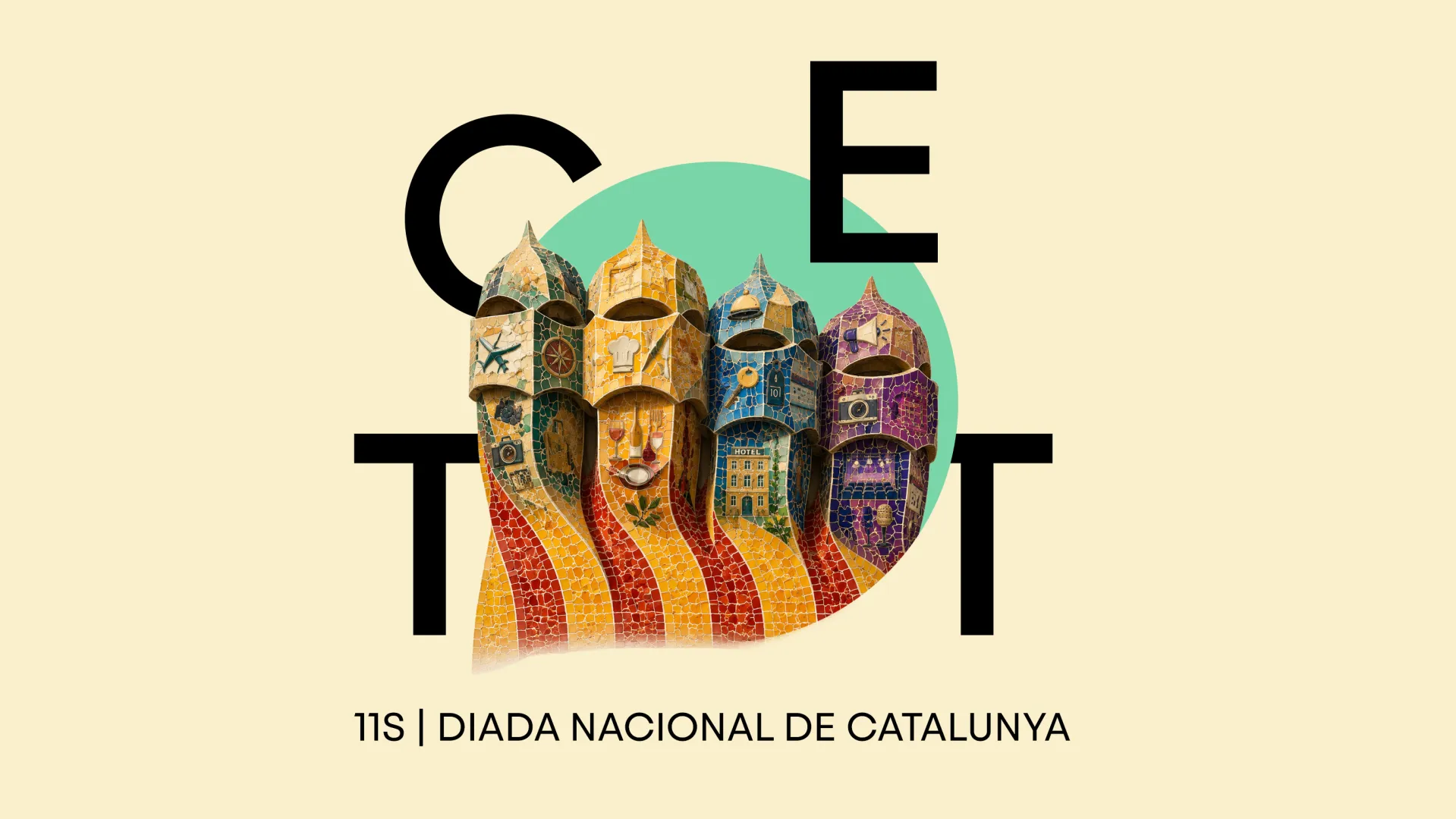
What has made Catalonia and Barcelona international leaders? From tourism and gastronomy to sports, culture, and innovation, we take a look at 10 key factors that explain their international prominence and the development of a brand recognized around the world.
A country's international profile is not built on visibility alone. It is built on identity, talent, the capacity for innovation, and a distinctive way of presenting itself to the world. Catalonia and, most notably, Barcelona, are prime examples. On the occasion of Catalonia's National Day, Dr Eugeni Osácar, Academic Director of the University of Barcelona Chair of Tourism, Hospitality and Gastronomy, explains this evolution from the CETT perspective through 10 key factors.
Over the past thirty years, Catalonia has built an international profile based on sports, culture, heritage, gastronomy, innovation, and the ability to host major events. The 1992 Olympic Games ushered in a new era that continues to this day. Since then, new milestones have continually enriched the image and brand of Barcelona (and, to some extent, Catalonia), transforming the region into one identified with creativity, talent, and global influence.
1. Barcelona 1992: The Olympic Games that changed everything
The Olympic Games marked a major turning point for contemporary Catalonia. Barcelona transformed its waterfront, modernized its infrastructure, and presented itself to the world as an open, Mediterranean, and innovative city. In the summer of 1992, millions of people around the world discovered a city that had been unknown until then. The legacy was not only urban in nature; it also gave rise to a new way of presenting Barcelona and Catalonia to the world, laying the groundwork for their future international profile.
2. Barça: a global brand that puts Barcelona and Catalonia on the map
It is no exaggeration to say that no Catalan institution enjoys international recognition comparable to that of FC Barcelona. Over the past few decades, the club has transcended the realm of sports to become one of the most recognizable brands on the planet. Johan Cruyff’s Dream Team, Pep Guardiola’s era, Leo Messi’s leadership, and La Masía model have all contributed to building a narrative of excellence, talent, and identity that reaches millions of people. For many of them, their first exposure to Catalonia comes precisely through Barça, which has become a true global ambassador.
3. The culinary revolution: from El Bulli to the World Gastronomy Region
Catalan cuisine is one of the country’s major drivers of international recognition. Ferran Adrià revolutionized the global culinary scene from El Bulli, located in Cala Montjoi in Roses (Alt Empordà), which was named the world’s best restaurant five times (from 2002 to 2009). This momentum gave rise to new generations of exceptional chefs, including the Roca brothers, Carme Ruscalleda, Fina Puigdevall, Albert Adrià, the Torres brothers, Oriol Castro, Mateu Casañas, and Eduard Xatruch at the helm of Disfrutar Barcelona. These chefs and restaurants have played a decisive role in placing Catalonia on the global map of cutting-edge cuisine. This leadership has earned Catalonia well-deserved recognition as the World Gastronomy Region 2025 (the first time this title has been awarded to a European region). This distinction highlights not only haute cuisine but also local produce, the landscape, tradition, innovation, and sustainability.
4. Gaudí and Sagrada Familia: universal icons
The International Year of Gaudí 2002, celebrated in Barcelona and other Catalan towns, reinforced the global prominence of the Catalan architect and Modernism. Although there are seven buildings by Antoni Gaudí and two by Lluís Domènech i Montaner in Barcelona (and its surrounding regions) that are recognized as UNESCO World Heritage Sites, it must be acknowledged that the Basilica of the Sagrada Familia is one of the great international symbols of the city and the country. The basilica, which has been under construction for nearly a century and a half, has seen—especially in recent decades—a spectacular rise in its prominence as a symbol of Catalan architecture, creativity, and culture. The pinnacle of this, at least so far, has been the dedication of the Tower of Jesus Christ—the highest point and the tallest church in the world, standing 172.5 meters tall—which was blessed and officially dedicated in June 2026 by Pope Leo XIV. This event, which included a spectacular drone show, generated a wave of global admiration, propelling the Sagrada Família into the select group of global and universal icons.
5. Miró and Dalí: Catalan art with global appeal
Culture and heritage have been great ambassadors for Catalonia around the world. Figures such as Joan Miró and Salvador Dalí—deeply rooted in the region yet universal in scope—have contributed to its international recognition. The Year of Miró in 1993 and the Year of Dalí in 2004, coinciding with the birth years of the two artists, were significant moments for celebrating their legacy and reinforcing their global influence, as well as the importance of Catalonia as a cultural region. Barcelona, Mont-rojo, Figueres, Portlligat, and Púbol are part of an artistic landscape that connects creation, identity, heritage, and territory with a distinctly international dimension.
6. Catalonia, a Global Tourist Destination
Over the past three decades, Catalonia has established itself as one of Europe’s leading tourist destinations. Barcelona has been the driving force behind this growth and is now considered one of the most admired and sought-after cities on the global tourism scene. That said, this international reputation has also extended to the Costa Brava, the Costa Dorada, and even the Pyrenees. The region’s cultural heritage, landscapes, cuisine, wine tourism, coastline, and beaches are attractions that drive tourism in the region and position it among the most sought-after destinations on the planet. This success has also sparked a debate about sustainability, management, and tourism models. Today, the challenge is no longer to grow more, but to grow better, preserving the quality of life for residents and the value of the resources that have made Catalonia a premier destination.
7. Catalonia on screen
Audiovisual media has established itself as a strategic tool for promoting and positioning tourist destinations in a global, digital, and competitive environment. More specifically, feature films and fictional series generate audiovisual narratives with thousands of images that have the power to shape collective imaginations, evoke emotions, and influence perceptions of regions, transforming real places into desirable destinations.
Catalonia, as a powerhouse in both tourism and the audiovisual sector, is ideally positioned to develop screen-based tourism. On average, Catalonia hosts more than 80 fictional audiovisual productions each year, including major international films and series such as Uncharted, Game of Thrones, and The Crown. More and more people are recognizing that they no longer visit a place simply because they’ve heard about it or received a recommendation, but because they’ve first experienced it emotionally through the screen. Today, tourists don’t just visit places—they visit meanings, emotions, and stories. Screen-based tourism shows us just how much the imagination can transform reality and turn an audiovisual experience into a tourist experience. And, without a doubt, Catalonia has all the elements to become a leading destination.
8. Barcelona, tecnology hub
The arrival of the Mobile World Congress (MWC) in 2006 marked a turning point in Barcelona’s international standing. Since then, the city has steadily built an innovation ecosystem bolstered by other top-tier events such as the Smart City Expo World Congress and Integrated Systems Europe (ISE). Together, these events project an image of Barcelona (and Catalonia) as a region open to knowledge, research, and digital technologies, with the ability to attract talent, investment, and companies from around the world.
9. Primavera Sound and Sónar: Contemporary culture as a brand
International prominence is also built on culture and, more specifically, on music. Primavera Sound (launched in 2001) and Sónar (founded in 1994) have turned Barcelona into one of the world’s capitals of music, digital arts, and creativity. These festivals have helped revitalize Catalonia’s image, complementing its historical heritage with a contemporary, innovative, and cosmopolitan cultural scene.
10. Catalonia, a region that knows how to showcase itself to the world through major sporting events
Over the past few decades, Catalonia has demonstrated a remarkable ability to organize major sporting events—and to turn these events into tools for raising its international profile. The Formula 1 Grand Prix, the MotoGP Championship, the World Swimming Championships (2003 and 2013), the 2018 Mediterranean Games in Tarragona, the 2024 America’s Cup, the 2026 Grande Départ of the Tour de France, and the future 2031 Ryder Cup in Caldes de Malavella (La Selva) are just a few examples that share a common virtue: they put Catalonia in the spotlight before millions of spectators and make it the setting for a global narrative. However, the challenge is no longer just to organize major events, but to ensure that each one leaves an economic, social, and regional legacy, thereby strengthening the brands of Catalonia and Barcelona.
From Recognition to Positioning
These key factors explain more than just a string of successes. They explain the building of two brands: Catalonia as a country and Barcelona as a city. The Olympic Games projected a modern Catalonia; Barça, a global sporting identity; gastronomy, creativity; Gaudí and the Sagrada Familia, universal heritage; Miró and Dalí, Catalan art on the world stage; tourism, the region’s wealth and diversity; the audiovisual sector, the creation of new imaginaries; technology, innovation; festivals, contemporary culture; and major sporting events, an internationally recognized capacity for organization. After more than three decades, Catalonia and Barcelona have achieved international recognition for a combination of assets that form a shared narrative. The challenge in the coming years will be to transform this recognition into a positioning that generates economic, cultural, social, and territorial value for the country as a whole.