CETT Fundació Think Tank | Governance, data and climate action: the keys to transforming Mediterranean tourism, according to a CETT-UB report
The Tourism Policy Paper: Climate Emergency and Tourism in the Mediterranean reflects on the role of tourism in climate change
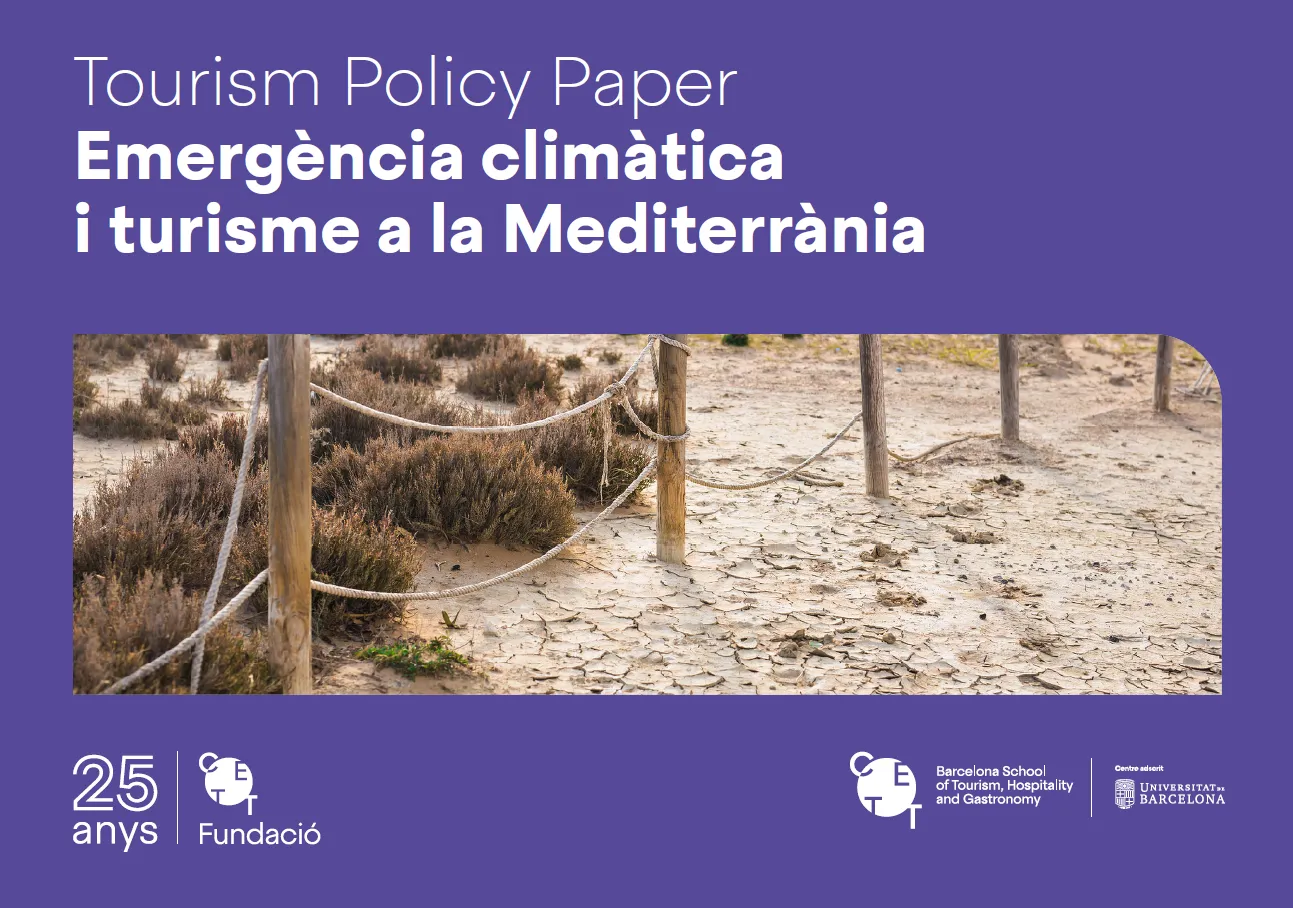
The CETT Fundació has presented the Tourism Policy Paper: Climate Emergency and Tourism in the Mediterranean, a strategic document developed by the research team at CETT Barcelona School of Tourism, Hospitality and Gastronomy. The report analyses the major challenges facing the tourism sector in the context of the climate emergency and proposes action pathways to advance towards a more resilient, regenerative model aligned with global climate goals.
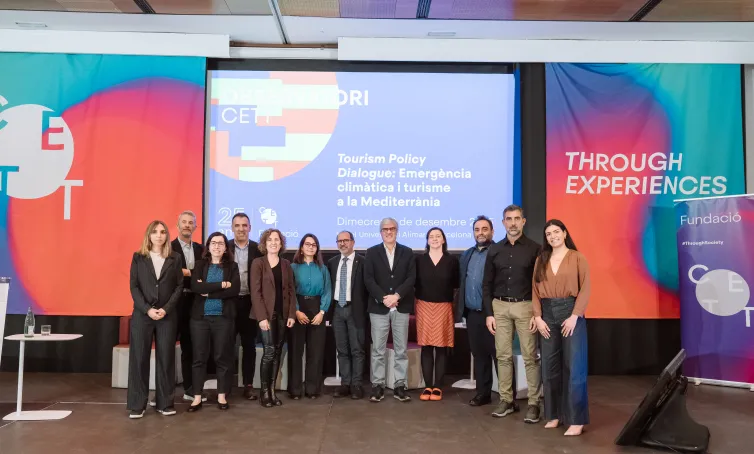
The document is the result of the annual Policy Dialogue promoted by the CETT Fundació Think Tank, a space for debate and analysis that brings together professionals, researchers, institutional representatives and experts from across the sector to address the main future challenges of tourism through a cross-disciplinary and multidisciplinary approach.
This year’s Policy Dialogue focused on the relationship between tourism and the climate emergency, highlighting the need to address this issue through knowledge, governance and coordination among public and private stakeholders. The report is based on a central premise: tourism plays a dual role in relation to climate change. On the one hand, it is one of the sectors most vulnerable to its impacts, particularly in regions such as the Mediterranean; on the other, it contributes significantly to global emissions and environmental pressure on ecosystems.
In light of this reality, the Policy Paper argues that inaction is no longer an option and underlines the role of universities and research institutions as key spaces for interpreting contemporary challenges and supporting evidence-based decision-making.
From knowledge to impact: data, governance and climate action
One of the report’s main conclusions is the need to address the climate emergency from a systemic perspective based on shared governance. The document warns that responsibility cannot rest solely on the individual decisions of travellers. Instead, a new paradigm is required—one that integrates adaptation and mitigation measures, public policies, territorial strategies and regulatory frameworks capable of driving structural transformation.
The report places particular emphasis on the need to generate useful data, not only on the impacts of climate change on destinations, but also on the real effectiveness of policies, tools and decarbonisation actions. In this regard, it argues that information and indicators must become instruments for transformation and decision-making.
Among its main strategic recommendations, the report identifies three major areas for action. First, the institutionalisation of a “climate lens” within tourism governance. Although UN Tourism reports that 62% of tourism policies mention climate change, this reference alone does not guarantee coherence or effective implementation in public policy.
Second, the promotion of sustainable behaviours through choice architecture and nudging strategies. These are particularly relevant in light of findings from the Sustainable Travel Report 2024, which shows that 75% of global travellers want to travel more sustainably, yet almost half (45%) do not know how to identify sustainable options or question their credibility. In response, the report highlights the need to strengthen standardisation and certification systems as tools for credibility and transformation.
The document also points to a significant gap between intention and behaviour in sustainable tourism. While citizens express high levels of concern about the climate crisis, this concern does not always translate into meaningful changes in consumption or mobility habits.
A collective response to a global challenge
The report insists that addressing the climate emergency will only be possible through collaboration between public administrations, the private sector, the scientific community and civil society. Within this framework, it highlights the role of academia in facilitating consensus-building and generating shared frameworks for action.
Finally, the Policy Paper concludes that the future of Mediterranean tourism will depend on its capacity to transform and adapt to the current climate context. In this regard, it identifies regenerative tourism as one of the most promising pathways towards a model that not only reduces negative impacts but also actively contributes to environmental and social regeneration.
Check out the Policy Paper.