Manuel Ortiz, General Manager of Septeo Spain and Portugal: “The future of tourism belongs to those who see opportunities where others see uncertainty”
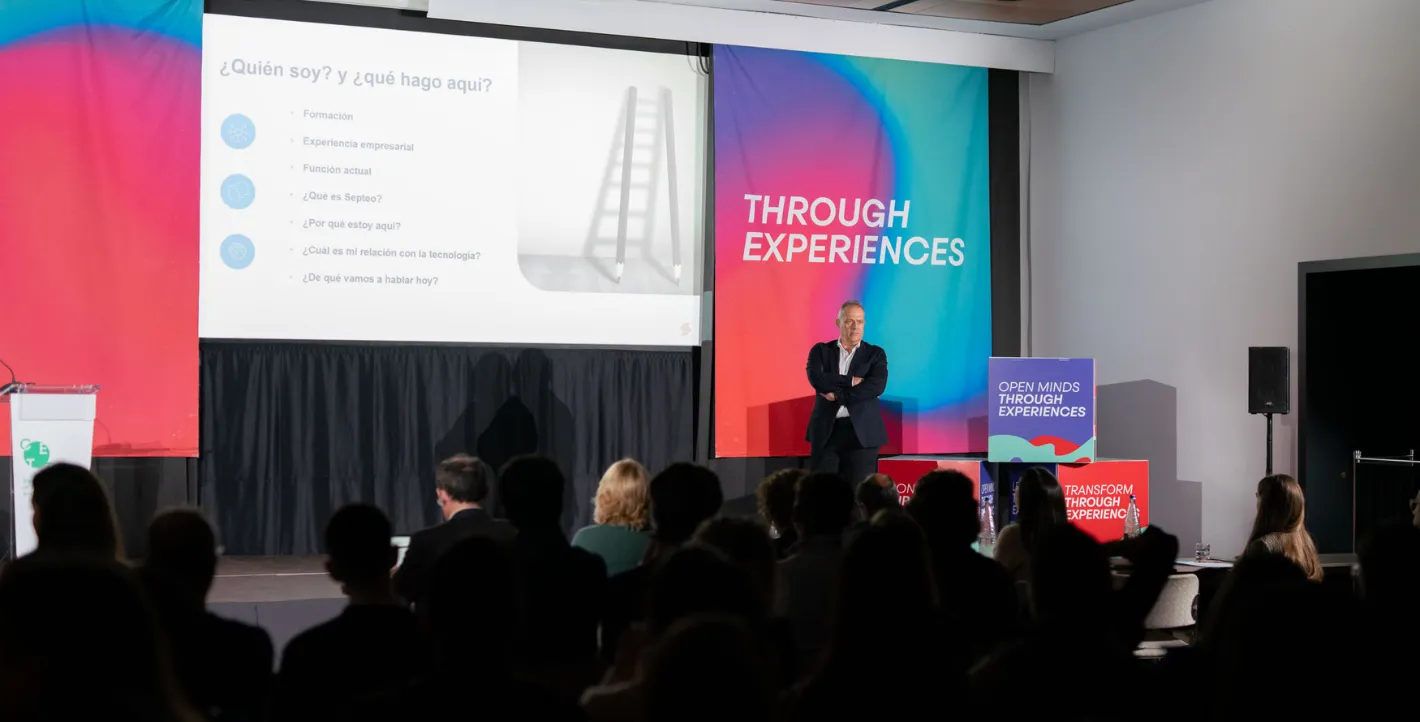
We spoke with Manuel Ortiz Paredes, speaker at the CETT Entrepreneurship Day 2025, about the future of tourism and the role of education in shaping it.
A Telecommunications Engineer (UPC) and MBA graduate from EADA, Manuel Ortiz has built his career around technology applied to tourism, with a strong entrepreneurial and innovative mindset. As co-founder of Thelis Unixdata, he led the expansion of Sequoiasoft across the Iberian Peninsula and integrated key companies such as Tesipro, HotelsDot, Revenue Control Data, and Mastercamping. Since 2023, he has served as General Manager of Septeo Spain and Portugal, driving the company’s Hospitality division through the consolidation of Ulyses Suite, an ecosystem that integrates solutions such as Ulyses PMS, Nivimu, Witbooking, and Qualitelis.
As a speaker at CETT Entrepreneurship Day, with the inspiring talk “Entrepreneurship and Leadership: Building the Future in Times of Uncertainty”, he connected directly with the tourism sector’s entrepreneurial ecosystem. We spoke with him to learn more about his professional journey and his vision for the future of tourism.
-
How did your professional journey begin, and which stages have been most significant in your development as an entrepreneur?
My background is in telecommunications engineering. Later, I completed a postgraduate degree and an MBA, both of which were fundamental because they created the “toolbox” that allows you to respond to adversity.
My entrepreneurial journey started early: I founded two companies before the age of 24. Afterwards, I joined a Paris-based family office as its first partner, where we acquired 13 companies, went public, and completed two successful exits. Following that stage, I joined Septeo, where I currently lead the Spain and Portugal division.
My professional life has revolved around transforming businesses, acquiring them, helping them grow, and creating value together with the people who are part of them. Entrepreneurship, building, and transformation have always been at the core of what I do.
-
How do you view the current landscape for those considering entrepreneurship in the tourism sector?
We live in a time when the only certainty is that everything will change—and faster than ever before. That makes knowledge important, but adaptability even more so. It is something I also tell my children: whatever they choose to do, they must assume that tomorrow’s reality will be different.
In this context, tourism has one major advantage: even during the most challenging periods, the sector has continued to grow. It is an industry that adapts, recovers, and moves forward.
-
What role do crises play in creating new business opportunities?
Historically, crises have been drivers of innovation. During World War II, technologies emerged that shaped entire decades, including radar, armored vehicles, and the first drones. Airbnb was born during the housing crisis; Tesla emerged when the American automotive industry was struggling; Zoom evolved from a relatively minor tool into an essential platform during the pandemic.
Crises generate new ideas, and entrepreneurs are the ones willing to explore them. That requires resilience. J.K. Rowling was rejected 12 times, Edison failed a thousand times before succeeding, and Henry Ford went bankrupt three times before achieving success. Failure is not getting it wrong the first time—it is giving up.
-
What do you consider essential when leading a business project today?
Traditional leadership no longer works. The model of “I know everything and tell everyone what to do” makes no sense today. No one knows everything, and often the person next to you knows more than you do. A leader’s role is to help others shine. You need to sit down with people and build together.
I have acquired 21 companies, and I always say the same thing: the world is full of “C’s”—collaborators, customers, culture, and communication—and all of them must be nurtured.
There are two essential pillars: vision, knowing which port you want to reach even when the wind pushes you off course; and purpose, which helps people understand why they work with you and what motivates them every morning.
And then there is something crucial: leading by example. I am part of the executive committee of a company with 3,600 employees. Everyone is watching and expecting consistency. Leadership is not about giving orders—it is about bringing people together.
-
How do you understand the role of technology in innovation and transformation processes?
Technology is important, but it is not the goal. The concept of digital transformation has become outdated because what truly mattered was not the digital aspect, but transformation itself. The same applies to artificial intelligence today. Technology should always be a means to support an idea.
This is especially relevant in tourism because it is fundamentally a people-centred industry, both for those who experience it and those who make it possible. Technology helps, but what really matters is the transformation created around it.
-
What kind of continuous learning is necessary for someone who wants to lead or start a business in tourism?
Learning does not end when you leave university—it continues throughout life. The world changes, users change, technology changes, and tourism changes. You must study, observe, analyse reality, and adapt.
An entrepreneur is like a chameleon. In my team, we change things every two months. It may sound crazy, but if you do not change, the environment will change you. Stumbling is part of the journey. I have been doing this for 30 years and have stumbled many times. That is perfectly normal. You get up and keep moving forward.
-
What role do universities and initiatives such as Entrepreneurship Awards play in developing new business projects?
Universities play a very important role because they are among the first places where intellectual curiosity and the desire to create something new emerge. Beyond providing technical knowledge, they should help develop critical thinking, analytical skills, and an entrepreneurial mindset.
Initiatives such as Entrepreneurship Awards are important because they showcase talent, create role models, and provide an environment where ideas can become real projects. They also allow students and young professionals to connect with the business world, which is essential for understanding how to transform an idea into a company.
When universities, businesses, and entrepreneurs collaborate, they create a much more fertile ecosystem for innovation. These initiatives do not simply recognise projects—they inspire others to take the leap and realise that entrepreneurship is a real option.
-
Which trends do you consider most important for the future of tourism?
Sustainability and inclusion. I cannot imagine tourism that is not sustainable and inclusive. We live in a developed society and have a responsibility not to damage the planet or leave anyone behind.
This is part of a broader global awareness. What we do affects not only ourselves but also our customers, collaborators, communities, and ecosystems. Those who anticipate this shift will gain a real competitive advantage.
-
Finally, how do you envision the future of tourism for aspiring entrepreneurs?
I see a future full of uncertainty—and that means full of opportunities. Uncertainty fuels innovation, and innovation fuels entrepreneurship.
Tourism will continue to grow, but success will belong to those who can adapt, lead with purpose, commit to sustainability, and view every crisis as an opportunity to build something new.