Josep Font, international sales professional and CETT alumnus: “What limits you is not your starting point but your willingness to move.”
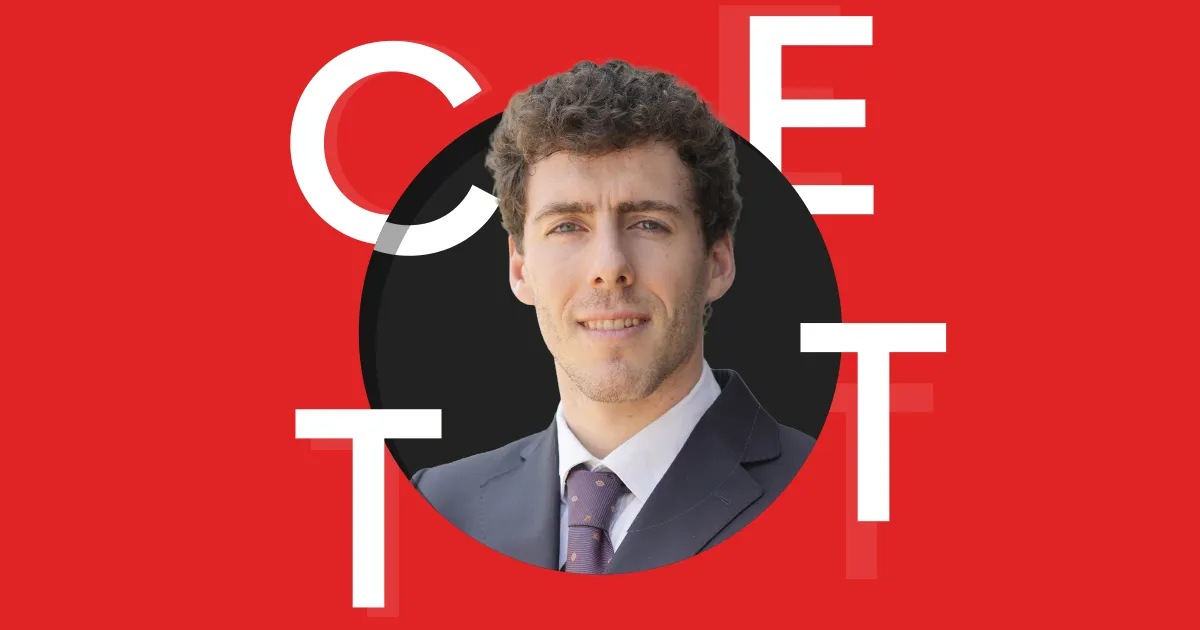
Josep Font, a CETT alumnus, shares his international career journey, which has taken him from hospitality to consulting, from Barcelona to Cambodia. A path shaped by adaptability and resilience.
Josep Font, a graduate in Tourism and Hotel Management, began his career in the hotel and events sector before specializing in marketing, sales, and business development. After gaining experience in the United States, the Netherlands, and Asia, he currently leads international operations and commercial activity from Cambodia in the security and defense sector, managing markets in Asia-Pacific, the Middle East, Europe, and South America.
1. We'd like you to introduce yourself (your name, where you're from, what you studied, etc.).
My name is Josep Font Redondo, I'm from Barcelona, and I studied Tourism and Hotel Management at CETT. I spent my final year in Thailand on an exchange program at Srinakharinwirot University, and after returning, I spent a year in the United States working at a hotel in Colorado. When I came back to Barcelona, I decided to make a change: I completed a Master's in Marketing Management at ESADE and worked in sales and digital transformation consulting for the pharmaceutical sector. Shortly after, I moved again, this time to the Netherlands, and from there to Asia. I currently work for a company specializing in events for the security and defense sector, managing commercial operations and business development in Asia-Pacific, the Middle East, Europe, and South America. It's an unconventional path for a tourism graduate — but having learned to navigate very different cultural contexts, which is exactly what I was able to do thanks to CETT, both during my exchange and in the US, is what has allowed me to operate in markets where many other professionals don't know how to enter.
2. What motivated you to choose CETT for your studies?
When I finished high school, I knew exactly what I wanted, although I didn't know what it was called: I wanted a degree focused on working with people, that would require me to learn languages, that would open doors to working in other countries, and that had a real-world practical component. The Tourism degree at CETT met all these criteria. Furthermore, CETT had a very good reputation: professors who were active professionals in the sector, a strong alumni network, and a practical orientation that other universities didn't offer in the same way.
3. What was your CETT experience like?
The CETT experience was formative in many ways. The group projects forced me to communicate and defend ideas in other languages and to learn to work with very different profiles, a skill that is essential in international environments.
Of all the internships, the one at the Hotel Arts in Barcelona was the most demanding. It's a high-demand environment where standards are never lowered and mistakes are quickly punished. There I learned what it truly means to work under pressure, and it's a lesson that has stayed with me in every position I've held since.
But what I remember most fondly is the people. At CETT, I built friendships that continue to this day, and that, over time, is worth as much as, or even more than, any academic content.
4. Could you tell us about your career path since you finished your studies at CETT, through your internships to the present day?
I started with internships in Food & Beverage and customer service, but I soon realized that what I was passionate about was the commercial side and entrepreneurship. During my studies, two classmates and I founded The Outcast Events, an event planning project that gave me my first real experience of building something from scratch.
The year I graduated, I went to the United States to work at a hotel in Colorado, and upon returning, I completed a Master's in Marketing Management at ESADE. After finishing the Master's, I worked at Novartis, where I had my first serious experience with B2B sales, marketing, and digital transformation. Later, I collaborated with Unlimited Thinking, a sales and marketing consultancy for the pharmaceutical sector founded by Clara Cano, a professional from whom I learned a great deal and who continues to grow the company today.
In 2022, I joined NCT Consultants in the Netherlands, a company specializing in event organization and consulting for the defense and security sector on a global scale. I started as a Sales Consultant and in less than two years I progressed to Asia and Sales Director, opening and managing the regional office in Phnom Penh, Cambodia, with responsibility for markets in Asia-Pacific, the Middle East, Europe and South America.
5. Your first roles were in food and beverage, events, and customer service. How did these experiences help you develop a solid professional foundation?
These roles gave me something you can't learn in a classroom: the ability to quickly read people and adapt to each situation. In hospitality and events, every client is different, every service is new, and the margin for error is minimal because everything happens in real time and right in front of the client. There's no time to overthink; you have to act, solve problems, and stay calm all at the same time.
This pressure shapes you in a way that's difficult to replicate in other environments. You learn to manage expectations, de-escalate tense situations without the other person noticing, and find solutions with the resources you have at that moment, not the ones you wish you had.
Years later, when I find myself facing a CEO, a sales director, or a government representative trying to close a complex deal, my composure and situational awareness come directly from that experience. Ultimately, selling in high-end B2B and serving a demanding client in a five-star hotel have more in common than they seem: in both cases, what makes the difference is the ability to quickly identify what the other person truly needs, which is often not what they've asked for, and offer them a suitable solution.
6. In the early stages, you also ventured into The Outcast Events. What led you to create this project, and what did you learn from this experience?
The project was born from the desire of three friends to do something different related to the world of events and music.
The idea behind The Outcast Events was, as the name suggests, to hold events in unconventional locations and never repeat them: a sewing workshop, iconic Barcelona venues like Plataforma, or even a catamaran off the coast of Barcelona.
What I gained wasn't so much the financial outcome as the learning experience of managing the entire cycle: idea, sales, operation, and after-sales service. I learned that entrepreneurship is about managing uncertainty with limited resources and making quick decisions. And doing it with two good friends made the learning experience twofold: professional and personal.
7. Throughout your career, you've worked in various fields before specializing in sales and consulting. What was this process of focus and professional growth like?
It wasn't a premeditated plan but a natural evolution. In every organization I've been in, I enjoyed myself more and contributed more when I had a client-related role. The turning point was during my year in the United States, where I had the opportunity to closely observe the hotel's marketing and sales team. I immediately understood that I wanted to do what those people were doing.
After specializing in marketing and sales at ESADE, my experience at Novartis gave me a perspective I didn't have before: how one of the world's largest companies operates internally, its business processes, and the complexity of sales and marketing at scale. I came from a company run by three friends, The Outcast Events, and suddenly I had the other end of the spectrum, and both were equally valuable.
Finally, the leap into B2B consulting and sales in a very specific sector like global security allowed me to apply everything I had accumulated: the internships at Hotel Arts and The Outcast Events, the summers working in Malta, the exchange year in Thailand, and the experience in the United States. Each stage has been valuable.
The reflection I want to share is this: it's good to have a plan and a vision for the future, but plans change. What really matters is having the resilience to adapt and move forward when they do.
8. You have developed a significant part of your career in different countries such as Malta, the Netherlands, and currently Cambodia. What has this international experience given you?
The question mentions Malta, the Netherlands, and Cambodia, but if you'll allow me, I'd like to review all my international experiences, because each one has had its impact. Thailand was the first. Although I went as a student, it was the place where I had my first experience so many kilometers from Barcelona. The two most valuable lessons were understanding the importance of respecting a country's culture and traditions—once you do, everything becomes much easier—and realizing that I had to improve my English if I wanted to work in a truly international environment.
Malta was my first work experience in a multicultural context outside of Spain. It was entirely commission-based, as you earned a percentage of what you sold, and that pressure taught me a lot about self-motivation and resilience.
In the United States, I worked at a hotel in Aspen, a very demanding environment where the clients were high-profile individuals from all over the world. It was the perfect place to elevate my English to a professional level and to learn how to manage VIP clients, negotiate, and sell in a high-standard context.
In the Netherlands, I entered a structured and direct corporate environment. There, I learned how B2B and B2G sales work on an international scale and was able to grow quickly within the company thanks to everything I had accumulated in previous years, eventually reaching the position of head of marketing and sales.
Cambodia has been the most transformative. Operating in an emerging market, building trust from scratch in a cultural context very different from Europe, and doing so far from family and friends, changes you professionally and personally in ways that are difficult to explain until you experience it. I recommend it to everyone.
9. How have these international environments influenced your understanding of business, sales, and customer relationships?
You realize that most of the sales principles you're taught in Europe need to be reconfigured when you move to a different market. In the United States, for example, customer service standards are very high. Most customer-facing professionals are paid on commission or tips, and you have to learn to keep up because the locals are very good and hardworking.
In Asia, the personal relationship precedes any business transaction. There's no contract without prior trust, and trust is built over time and through presence, not with calls and emails. This has made me a much more patient professional, more attuned to the cultural context, and a better listener, because often what a customer tells you isn't what you really need to understand.
In the Middle East, it's similar: before anything happens, they want to get to know you. The pace is completely different, and many people don't know how to work in that market because they don't understand that everything moves more slowly, but when something is meant to happen, it happens.
Ultimately, if you want to be a professional capable of working on any continent, you have to be willing to travel, live, and truly understand the culture of each place. That's why it's so important to be exposed to international environments from the beginning, and that's precisely what a program like CETT's can provide.
10. You've evolved into increasingly strategic roles in sales and business development. What have been the keys to this growth?
Looking back, I identify three key factors. The first is that I've always sought roles where my contribution was measurable—in terms of signed contracts, new clients, or business generated. In my opinion, vague roles where it's difficult to know if you're contributing or not hinder your growth and make you invisible within an organization.
The second is learning to speak, and to listen to, the language of decision-makers. In B2B sales, it's rarely technical language that closes a deal: it's language about risk, return on investment, and reputation, among other things. But what you don't say is just as important as what you say. Knowing how to listen, especially to people with more experience than you—not necessarily older, but with more experience—has been one of the keys to my professional growth.
The third, and perhaps most important, is having embraced markets and sectors where few people wanted to go. Moving to the US, to Asia, working in emerging markets, entering a very specific and little-known sector—all of that placed me in environments where the competition didn't want to be, and the learning is exponential. When you're one of the few willing to do what others don't want to do, growth is much faster.
11. You currently hold the position of Director Asia and Sales Manager in Cambodia. What does your day-to-day work entail, and what are the main challenges of the role? How did you decide to work outside your home country?
The role has two very distinct dimensions. On the one hand, there's business development: identifying opportunities in new markets, building relationships with governments and international organizations, managing sales portfolios with very long cycles and multiple stakeholders, and representing the company at trade shows and industry events worldwide.
On the other hand, there's the operational management of the regional office, which I built from scratch in Phnom Penh. This included the legal registration of the office with the Ministry of Commerce and tax authorities, managing corporate bank accounts, liaising with local authorities, and constant coordination with headquarters in the Netherlands and the operational entity in Singapore.
There were three main challenges. First, the cultural and geographical distance: making real-time decisions while on the other side of the world from headquarters, in a completely different time zone, and within a very different institutional context than the European one. Second, the sales cycles in government markets, which can last for years and require a patience and perseverance that not everyone possesses. Third, operating with the resources of a small company in markets that would require those of a large corporation.
The decision to work outside of Spain was entirely deliberate. I could have looked for a comfortable job in Barcelona, but I've always believed that real growth happens when you put yourself in situations where you don't have a safety net. Going to Cambodia, building something from scratch far from family and friends, and doing so in a complex and demanding market, has been the most difficult and most valuable professional decision I've made so far.
12. Looking back, what impact have your different experiences (hospitality, entrepreneurship, consulting) had on your leadership style for teams and projects?
Each stage of my career has given me a different perspective, and combined, they have changed the way I lead teams and projects.
Tourism and hospitality give you operational empathy. When you've been on the front lines managing demanding clients in real time, solving problems on the spot, you understand what it means to be in that position. This makes you a leader much more aware of the day-to-day challenges your teams face and less likely to make decisions from an office without understanding the real impact they have on the people who have to implement them.
Entrepreneurship with The Outcast Events taught me to do a lot with a little. When you don't have unlimited resources, you learn to prioritize, to be creative, and to make quick decisions with incomplete information. This experience is invaluable when leading projects in complex environments where things rarely go exactly as planned.
Consulting and B2B sales gave me analytical discipline, the ability to structure complex problems, identify what's truly important, and communicate it clearly to people with very different profiles, from a finance director to an operations manager.
And finally, having opened and managed an office in Cambodia from scratch, with all the legal, cultural, and operational complexities that entails, has taught me that leading in uncertainty is a skill in itself. When you've had to make important decisions thousands of miles from headquarters, in a context that no master's program had explained, leadership ceases to be a concept and becomes a daily necessity. I had a local team in Cambodia, and without trusting them, nothing would have worked. In the end, empathy and trust in the team are the difference between a project that succeeds and one that fails.
13. What has been the most important lesson you've learned in your professional career so far?
That the sector you start in doesn't determine where you end up. Most of the skills that truly matter, from my perspective (selling, building relationships, managing uncertainty, adapting to new contexts…) are transferable across industries and cultures.
What limits you isn't your starting point, but your willingness to move when the opportunity lies off the beaten path.
But for that to happen, you have to be willing to do things most people wouldn't: move to another country, learn a new language, work on a continent with a culture completely different from your own, build something from scratch without a safety net.
Everyone talks about stepping outside their comfort zone, but few people actually do it when the time comes.
I did, and it was the best decision of my career. CETT gave me the tools; I decided where to apply them. If I had waited for the perfect moment or the perfect plan, I'd still be waiting. And the next chapter, whatever it may be, will start from exactly the same principle.
If you have any advice or would like to add a question you think would be interesting for future tourism students or recent graduates, please feel free to share it.
Live abroad. Not on vacation, but for real: work, pay rent, do the shopping, deal with bureaucratic issues in a language that isn't your own… Only when you stop being a tourist in a place do you understand how the locals think, how they interact, what they value, and what offends them. This, in any job that involves clients, negotiation, or international leadership, is worth more than any master's degree. Tourism gives you the perfect excuse to do it; I recommend you take advantage of it.