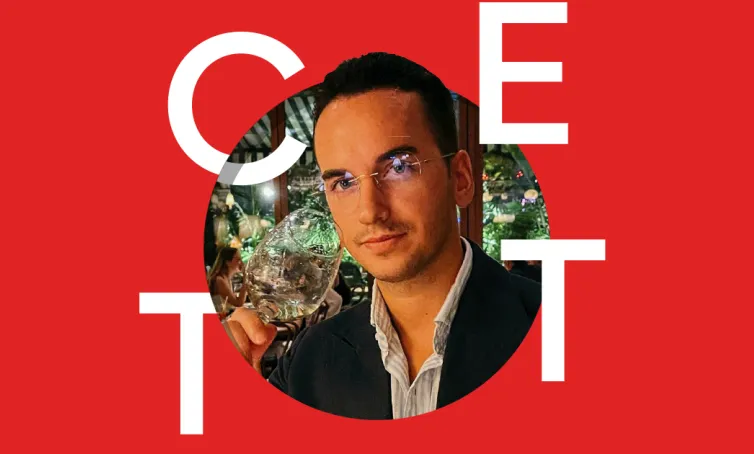
Clara Bonet, Digital Entrepreneur and CETT Alumni: “I believe you can never go wrong by trying new things”
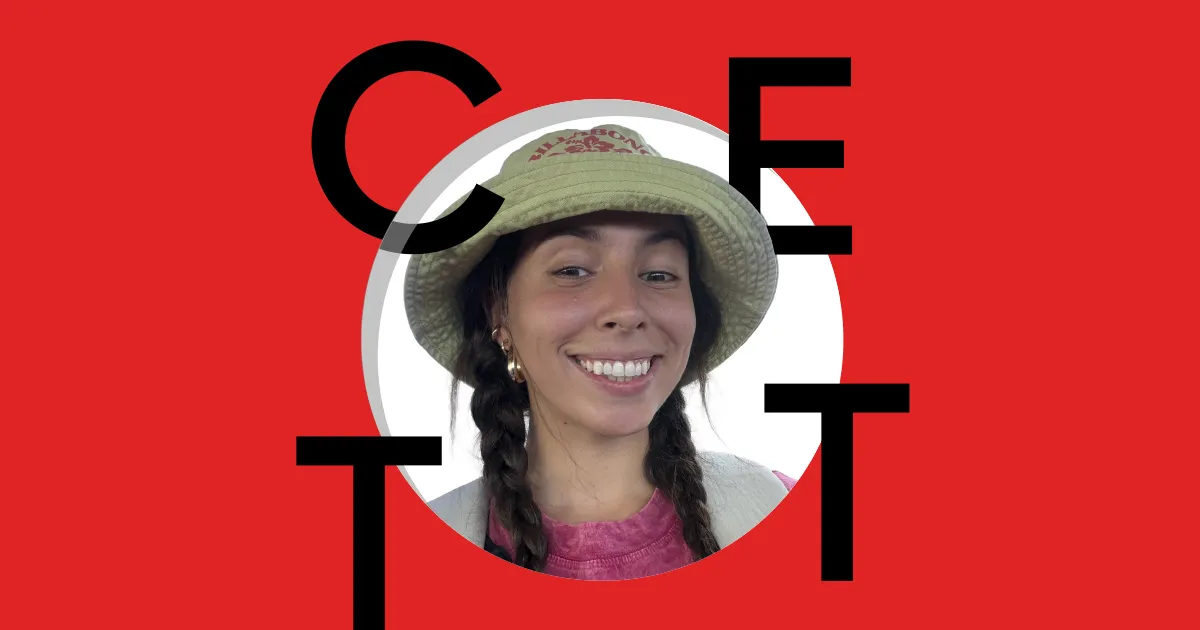
Clara Bonet, CETT Alumni, shares how she combined her passion for travel and digital marketing to build her own project in Indonesia. A journey shaped by entrepreneurship, career reinvention and finding her own path.
Clara Bonet, a Tourism and Hotel Management graduate from CETT, discovered her passion for communication and digital marketing during her studies. After gaining professional experience in the field, she decided to pursue entrepreneurship and develop her own project, Viaja con Clari. She currently lives in Gili Trawangan, Indonesia, where she creates travel content, guides and digital resources to help fellow travellers.
1. We would like you to introduce yourself: your name, where you are from, what you studied, etc.
My name is Clara Bonet, I am from La Garriga, and I studied Tourism and Hotel Management at CETT. Afterwards, I completed a master's degree in Marketing and Social Media at UOC, because during my studies I discovered that what I was truly passionate about was communication, marketing and the entire digital world applied to the tourism industry.
I currently live in Indonesia, on Gili Trawangan, and I am self-employed, combining digital marketing, content creation and travel through my own project.
2. What motivated you to choose CETT for your studies?
I chose CETT because I had always known that I wanted to travel and that I was very interested in the world of tourism. I attended an open day and really liked the atmosphere, the way the programmes were presented and the opportunities the industry could offer.
At that point, I still didn't know exactly which direction I wanted to take professionally, but I knew that tourism was an industry that really appealed to me and could open many doors.
3. What was your experience at CETT like?
My experience at CETT was good, especially because it helped me understand what I liked and what I didn't. In fact, I realised quite quickly that the hospitality industry wasn't for me and that I couldn't really see myself working as a travel agent either.
For me, those were years of trying lots of different things, making mistakes, discovering new interests and gradually finding my place within the industry.
4. Could you tell us about your professional journey, from your internships during your studies at CETT to where you are today?
My interest in marketing actually began during my degree. In my third year, I had my first introduction to tourism marketing through a digital communication course (COMCOM), where I learned the basics of marketing using examples from the tourism industry. I absolutely loved that class, and it planted an idea in my mind that somehow never went away.
My first internship was at a hotel, but I quickly realised that it wasn't the right path for me. Later, during my Erasmus in Breda, an administrative mistake led me to take a minor in e-tourism and tourism digitalisation. It was quite unexpected at the time, but it turned out to be a very positive experience because it opened my eyes even further and confirmed that it was possible to combine communication and travel.
When I returned, I completed an internship at a small company working in tourism and marketing. To be honest, it wasn't an easy experience, and the internship wasn't particularly well structured by the company. I found myself taking on a lot of responsibility without much guidance. However, it gave me considerable independence and allowed me to explore many different areas and learn a great deal about the industry. That was when I realised that if I really wanted to work in marketing, I needed to develop my skills further.
Then came COVID-19 and graduation. I had planned to work in a hotel or travel agency while continuing my marketing education, but the tourism industry had come to a complete standstill. So I decided to start from scratch and look for opportunities directly in communication. Through persistence, searching independently and visiting companies in person, I managed to secure an internship at a company that had nothing to do with tourism but gave me an incredible opportunity.
I started as an intern and stayed for three years. During that time, I learned an enormous amount, gradually progressed within the company and eventually led a European-scale project with a team of eight people under my responsibility. At the same time, I completed my master's degree in Marketing and Social Media to consolidate everything I was learning.
During those years, I also started my personal project, @viajaconclari. Since I was learning how social media and digital strategy worked within a company, I wanted to apply that knowledge to something of my own. I started sharing my travels, travel tips, ways to plan itineraries and advice on making the whole process easier. At first, I wasn't making any money from the project, but more and more people became interested in what I was sharing.
After three years working for a company, I decided to go backpacking around Asia. What was supposed to be a six-month trip turned into nine months. During that journey, I confirmed two things: that I loved marketing and that I loved travelling, but I didn't want to spend my entire working life in an office.
From that point on, I decided to become a freelancer, doing the same work I had been doing in Barcelona, but remotely. I moved to Indonesia, to Gili Trawangan, and I have now been living there for almost two years. During this time, I have gradually stopped working with some clients so I can dedicate more energy to my own tourism project: creating travel guides for Europe and Bali, digital resources, useful content for other travellers, and teaching other people how to build similar systems.
Ultimately, I think my journey sums up one idea very well: I love travelling, which is why I ended up studying tourism, but professionally, what I have always loved is marketing. Over the years, I have found, or perhaps partly created, the perfect balance between these two worlds.
5. You started your career working in marketing and social media companies. At what point did you begin to rethink your professional path?
I started rethinking my professional path when I began travelling more and realised that I could do the work I loved without being tied to one particular place.
It wasn't that I didn't enjoy what I was doing. In fact, I love marketing, I love creating systems, developing strategies and seeing an idea turn into something real. If I didn't love travelling, moving around and living in different places so much, I could probably be working for a company and be perfectly happy.
But when I realised that I could do all of that while having the freedom to move around, something changed. I have never wanted to be rich, but I have always wanted to be free. Free to work on what I want, from wherever I want, and on projects that are meaningful to me.
I have had to work very hard to achieve that, but it has always been my goal: to earn enough to live, keep growing and, above all, see the world.
6. What made you decide to take a chance on yourself and stop working for other companies?
I think what made me take a chance on myself was realising that I was already building something of my own, even though I didn't initially see it as a business. For years, I had been publishing content, helping other people organise trips and building a community that trusted me.
There comes a point when you think: if I'm putting so much energy, creativity and so many hours into other people's projects, why not try putting all of that into my own project too?
There was also a very personal side to it. I wanted the freedom to decide what I did, how I did it and where I wanted to take things. I wanted to be able to test ideas without waiting for someone else to approve them. And, above all, I wanted to see how far I could go if I truly believed in myself.
It wasn't a decision I made overnight, but there came a moment when I felt that if I didn't try, I would always wonder what might have happened.
7. Taking that step involves risks. What doubts or fears did you have at the time?
I'm the kind of person who usually doesn't overthink these things. I tend to take the plunge, give things a try and see what happens. I also strongly believe that when you put in the hours, the work and the consistency, things eventually work out.
But it's true that, for the first time, I felt genuinely nervous. I think even my family was surprised because it's unusual for me to admit that I'm scared. But it was a huge leap: I started my own business while moving to the other side of the world, without savings and with a very unconventional path ahead of me.
I was afraid it wouldn't work. I was afraid of being so far from home and realising I had made a mistake. And I was also afraid that the idea I had so clearly imagined in my head might not actually be possible.
I wasn't afraid of making mistakes along the way, because I believe you can never go wrong by trying new things. But I was afraid that I had imagined a life I might not be able to sustain in reality.
8. What were your early experiences like as a professional content creator?
Sometimes I'm not sure I would describe myself exactly as a professional content creator, or at least not just that. It's true that I've put a lot of effort into my social media channels to turn them into a trusted reference point, a place where people believe in what I share. But my goal has never been to make a living solely from brand collaborations.
In fact, I hardly do any. At one point, I realised that I felt much more comfortable selling my own products, guides and resources, which I had created with so much love and personal experience, rather than promoting things I might not even have properly tried myself. Besides, relying on one collaboration after another seemed very unstable to me.
That's why I think that, rather than simply being a content creator, I've built a digital platform: a space where I share knowledge, experience and resources related to travel.
The beginning was very slow. My audience started growing significantly when I covered Spain's Bono Verano Joven programme in 2023. I was trying to apply for it myself and realised there wasn't a clear tutorial available. I thought, “I'll explain it myself, because I'm sure it will help lots of people.” From that point on, my numbers started growing considerably.
Even so, I spent almost three years publishing content without earning practically anything. I did it because I loved the project, because I enjoyed it and because I had a feeling that one day it would all make sense. That moment came in 2025, when I started selling my own digital products and travel guides.
9. You have managed to build your own community on TikTok, Instagram and other platforms. What do you think have been the keys to growing your audience?
I think the most important factor has been providing genuine value. Not posting just for the sake of posting, but trying to make every piece of content useful to someone: helping them plan a trip better, save money, understand a procedure or discover a new route.
I also believe consistency has been extremely important. For a long time, I kept publishing without seeing any financial results, but I continued because I believed in the project. On social media, people often only see the moment when someone becomes successful, but they don't see all the previous years of trial and error, or the content that doesn't always perform well.
10. Today, you work as a content creator and manage your own marketing. What does a typical day look like for you?
My daily routine is very varied, and that's exactly one of the things I love most about it. I can organise my time pretty much in my own way.
I usually try to dedicate my mornings to creative work and tasks that require concentration: writing scripts, developing new projects, creating guides, reviewing systems, preparing content or working on digital products. I tend to leave the more interactive tasks for the afternoon, because that's when Spain wakes up and when the companies and people I work with are also active.
In the afternoon, I have meetings, reply to messages, connect with my community, review comments and spend more time engaging on social media.
And whenever I can, I try to remind myself why I chose this lifestyle. If I have some free time, I go diving, surfing or simply do something that helps me reconnect with the place where I live. Right now, I work very long hours, but I also have the freedom to incorporate these little things into my daily life, and that means a lot to me.
11. What does working for yourself give you that you didn't have when working for other brands or companies?
The answer is very simple: freedom.
The freedom to decide what I do, how I do it and where I want to take my project. The freedom to try new ideas without having to wait for three people above me to approve them. And the freedom to make mistakes, learn and try again.
It also gives me a great sense of pride. Sometimes I look back and think about the little girl I used to be, with all those ideas and dreams of seeing the world, and it makes me really happy to think, “Look how brave you're being. It was just an idea, and you're making it happen.”
12. Was there a particular moment when you realised that your decision had been worth it?
Yes, I remember it perfectly: when I started selling my first travel guides.
It wasn't just about making sales, but about what those sales represented. It was seeing that all the content I had created over the years, the community I had built and the trust I had developed were finally starting to turn into a real project.
It was a very special moment because I felt that everything was starting to make sense. That I hadn't spent years posting content for nothing, but that I had been building something, even if I hadn't fully realised it at the beginning.
13. From your experience, how is the tourism industry changing with the rise of content creators and personal branding?
The world of content creation is constantly changing. A few years ago, when I started, many companies in the tourism industry still didn't consider a well-managed, active and strategic digital presence essential. Now, in 2026, that has changed significantly.
Today, many tourism brands not only consider it necessary, but also allocate a significant part of their budgets to it, because they understand that digital communication is essential for connecting with today's travellers.
However, I also think it is becoming increasingly demanding. In the past, simply showing a beautiful trip could be enough to promote a destination or a brand. That's no longer the case. Today, content creators need to provide real value, stand out, educate their audiences, communicate more effectively, be more transparent and build trust.
I think the tourism industry is realising that personal branding and content creators have enormous influence, but also that not everything works. People are becoming quicker at recognising when a recommendation is empty or when there is no genuine experience behind it. That's why I believe the future lies in more useful, honest and carefully developed content.
14. What advice would you give to CETT students who want to work in digital marketing or build their own personal brand but are afraid to take the first step?
I would tell them to give it a try. One of the most positive aspects of the digital industry is that it is still expanding, and there is room for many people.
If you have an idea, review it, look for inspiration, shape it and launch it. Creating a digital project is much easier than many people think. That doesn't mean maintaining it or growing it is easy, but getting started is more accessible than ever.
I would also tell them not to wait until everything is perfect. You'll never have the perfect website, the perfect video, the perfect idea or the perfect moment. But the most important thing is to start. When you start, you learn. And when you learn, you improve.
So my advice would be: if you have an idea, try to make it happen. Test it. Make mistakes. Adjust. Try again. Because very often, what changes your path isn't having everything figured out, but having the courage to take that first step.